Interesting Facts About Gorillas: From Mountain Giants to Silverbacks
When you think of Africa’s wild treasures, lions and elephants might come to mind. But gorillas, those incredible, ground-dwelling primates, are just as fascinating, we promise!
From their immense strength to their surprising social behaviors, gorillas are sure to capture your attention… IF you’re lucky enough to see them, that is.
Let’s learn some of the most interesting facts about gorillas, including their habitats and unique traits. We’ll also talk about why trekking to see them is unforgettable.
Why Gorillas Are Among the Most Fascinating Animals in Africa
African Gorillas and Their Habitats
Gorillas live only in Africa, but they are spread across diverse landscapes. You’ll find them in lush rainforests, volcanic mountain ranges, and even swampy lowland areas. There are two main species: Eastern gorillas (including mountain gorillas) and Western gorillas (including western lowland gorillas). Each group has adapted beautifully to its environment. This makes them true specialists in survival.
Are There Still Wild Gorillas in Africa?
Yes! There are threats from poaching and deforestation, but wild gorillas still roam parts of Africa. Mountain gorillas usually thrive in Uganda, the Democratic Republic of Congo, and Rwanda. (By the way, June through September is the best time to go to Rwanda to see gorillas). Lowland gorillas can be found in Central and West Africa.
It is useful to mention here that conservation efforts, led by organizations like the WWF, have been critical in keeping their numbers stable. This is especially true for mountain gorillas, whose population has been slowly increasing in recent years.
Mountain Gorilla vs Lowland Gorilla: Key Differences
Lowland vs Mountain Gorilla: Where They Live and How They Adapt
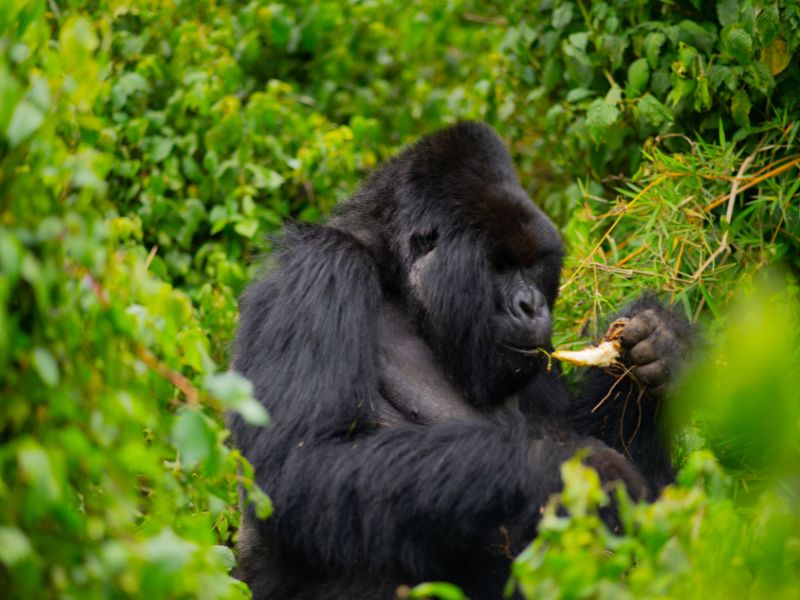
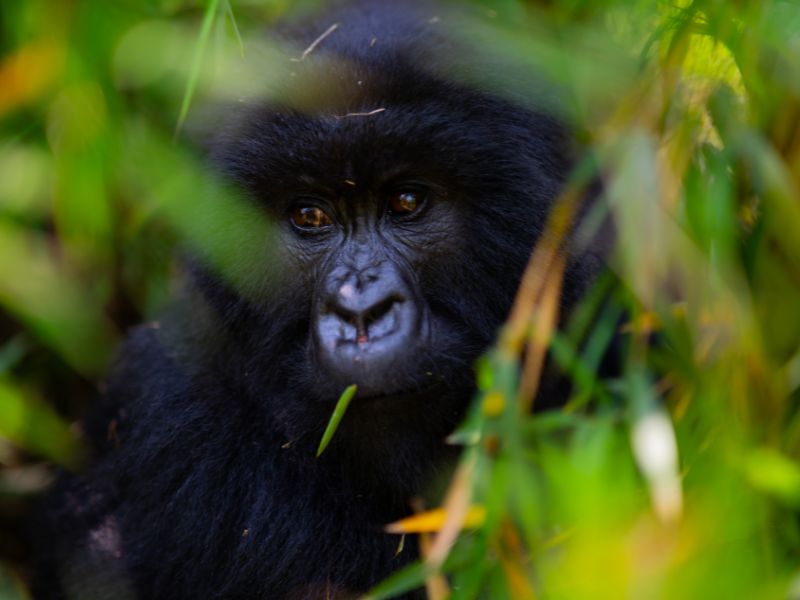
Mountain gorillas prefer cooler and high-altitude habitats in volcanic regions. They often live more than 2000 meters above sea level. Their thick fur helps them survive chilly mountain nights.
On the other hand, lowland gorillas live in warm and dense rainforests where food is abundant year-round. Their shorter hair and smaller groups help them adapt to these tropical climates.
Size and Strength: How Big is a Mountain Gorilla?
A full-grown male mountain gorilla (this is often called a silverback) can weigh up to 200 kg (over 400 lbs!) and stand 1.7 meters (5.5 feet) tall when upright. But—you might find this one hard to believe—gorillas are mostly gentle herbivores. Yes, even despite their massive size 🙂 And here’s one of the most mind-blowing interesting facts about gorillas: they are up to four times stronger than the average human!
Fascinating Life Facts About Gorillas
How Long Do Mountain Gorillas Live in the Wild?
Mountain gorillas can live for about 35 to 40 years in the wild. In captivity, some have reached 50 years. That said, their life expectancy depends a lot on being protected from poaching and disease. And this is what makes conversation efforts so vital.
Are Gorillas Nocturnal? Surprising Gorilla Sleep Patterns
Gorillas are “diurnal”. This means they’re active during the day and sleep at night. Every evening, they build fresh nests out of leaves and branches, either on the ground or in trees, to rest. A fun fact: gorillas rarely reuse their nests… each one is a brand-new creation!
Fun and Weird Gorilla Facts You Probably Didn’t Know
Gorilla Fun Facts
- Gorillas share about 98% of their DNA with humans! This makes them one of our closest relatives 🙂
- They communicate with over 20 distinct vocalizations. These include grunts and laughter-like sounds.
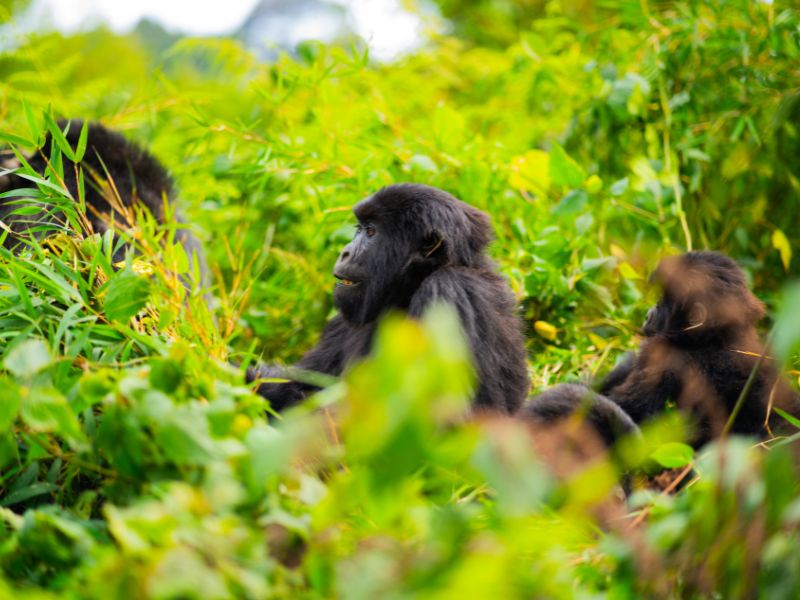
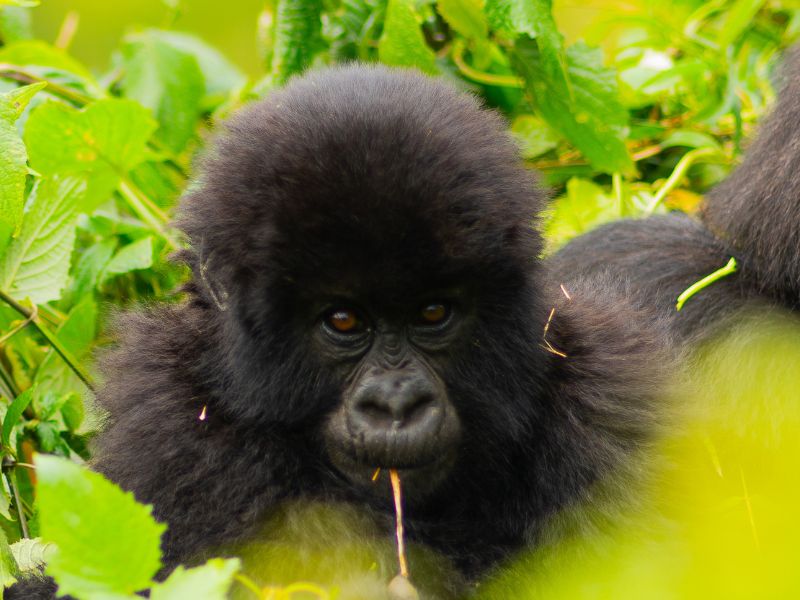
- Baby gorillas are incredibly playful. You can often see them tumbling and chasing one another, much like human toddlers.
Weird Gorilla Facts That Might Surprise You
- Gorillas are huge, but they’re shy! They will avoid confrontation whenever possible.
- They sometimes eat soil (yes, dirt 😅). And that’s not without a reason; they do so to supplement minerals missing from their plant-based diets.
- Gorillas can catch human diseases like the flu. This is one reason visitor health checks are mandatory before gorilla trekking.
Gorilla Trekking: What You Need to Know
Best Time to See Mountain Gorillas in Their Natural Habitat
The experience of seeing mountain gorillas in the wild depends a lot on timing. While gorilla trekking is possible all year round, most travellers prefer the dry seasons: from June to September and again from December to February. During these months, the trails are less muddy, the forest is easier to navigate, and your chances of enjoying long encounters with gorilla families are higher.
In the wetter months, trekking becomes more challenging as paths can be slippery. But the rainforest itself is beautifully lush, so it’s a rewarding trade-off (if you’re adventurous enough). Interestingly, gorillas themselves are not bothered by rain; in fact, mountain gorillas spend most of their lives in damp forests and are perfectly adapted to these conditions with their thick fur coats.
Another fascinating fact is that mountain gorillas usually live in family groups led by a dominant silverback male. These groups tend to stick to fairly predictable home ranges, which is why expert guides are able to locate them daily (regardless of the season). So while the drier months are often considered the “best time”, the truth is that any season offers the chance to witness these magnificent primates.
Is Gorilla Trekking Dangerous? Safety and Tips
At first glance, the idea of walking into a dense forest to meet animals that can weigh over 200 kilograms might sound intimidating. But truth be told: gorilla trekking is generally considered very safe when done with professional guides and rangers. These experts are not only skilled trackers but are also trained in gorilla behavior. So your encounter will be calm and respectful.
Gorillas are often called the gentle giants of Africa for a reason. Despite their strength and imposing size, they are typically shy, peaceful, and non-aggressive creatures. They spend most of their day eating, grooming, and caring for their young (instead of seeking conflict). Aggression is rare and usually happens only if they feel threatened, particularly if someone ignores trekking guidelines.
To make your trek safe and memorable, here are a few key tips:
- Keep a safe distance of about 7 meters from the gorillas. This helps avoid spreading human diseases and gives them space.
- Follow your guide’s instructions at all times; they know how to interpret gorilla signals, such as chest-beating (that’s a display of dominance, not necessarily aggression).
- Avoid direct eye contact with a silverback, as it can be seen as a challenge.
- Stay calm and move slowly if a gorilla comes near; sudden movements can startle them.
One fascinating fact is that gorillas are highly intelligent and curious. On rare occasions, young gorillas may wander closer out of curiosity. If this happens, it’s an unforgettable moment, but the best thing you can do is remain still and let them move on naturally.
Final Words
Let’s just say, gorillas are living proof of nature’s brilliance. These interesting facts about gorillas only scratch the surface, but they remind us why protecting them is so important. And for travelers, few experiences compare to sitting quietly in a forest, watching a silverback lead his family.
If you’re considering gorilla trekking, let’s get in touch and discuss your trip!