Safari Khaki Clothes: Do You Really Need Neutral Colors on Safari?
The first thing most travelers hear when planning a safari: pack neutrals. Safari khaki clothing has almost become a rule of its own. But do you really need to blend into the landscape in shades of sand and stone? Sure, khaki looks timeless in photos, and yes, it has practical roots. Still, modern safaris give you more freedom than you think. Let’s talk about the pros, the myths, the common mistakes first-timers make, and how to choose what to actually wear.
Why Neutral Colors are Popular on Safari
The History of Safari Style
The image of khaki safari clothes dates back to the early 19th century. A period when British soldiers in India first adopted khaki uniforms to stay cool and blend in with their surroundings. That look traveled with them to Africa, where it became tied to exploration and, eventually, adventure travel.
Over time, the concept evolved from strict military wear into something more relaxed… wide-brimmed hats, linen shirts, and rugged boots – practical gear designed for long days outdoors. By the mid-20th century, Hollywood picked up the trend. Films set in Africa romanticized the clothes to wear on safari, cementing khaki as the “official” safari uniform.
Now, it’s less about strict rules and more about tradition. Modern safari clothes for Africa nod to that history but give you enough freedom to mix in comfort + a bit of personal flair.
The Role of Khaki in Wildlife Travel
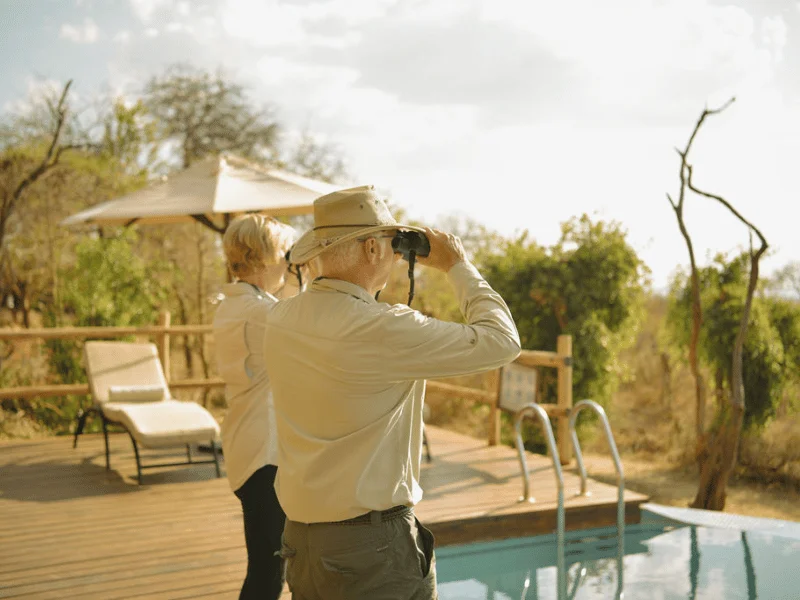
Neutral tones serve a significant purpose in the wild. Animals notice movement before color, but bright shades can still catch the eye. Wearing khaki safari clothes or other earthy neutrals helps you blend into the environment, so encounters become less intrusive.
It’s also practical. Dust and dirt are part of the adventure, and neutrals hide them better than crisp whites or bold colors. When you’re out for hours under the sun, clothes for safari in lightweight khaki cotton or linen stay cooler and feel less sticky.
At the same time, it’s worth noting: animals don’t mistake you for prey if you wear a blue shirt or a patterned scarf. Guides know how to keep you safe, no matter what. Khaki just makes the whole experience smoother, and yes, it looks pretty great in photos too.
Cultural and Practical Roots of “Neutral” Tones
When we say neutral tones are a cultural part of safari, we mean how people came to see and experience safari over time. Travelers have used it as a signal that they were stepping into the wild, ready for discovery. That identity stuck, shaping what people still think of as the “right” clothes to wear on safari.
Do You Really Need Khaki Safari Clothes?
Understanding Wildlife Visibility and Safety
Surprisingly, the biggest safari myth is that animals will spot you if you’re not in khaki. The reality is, wildlife reacts more to sound and movement than to the color of your shirt. A bright scarf won’t suddenly spook a lion, and patterned clothing won’t make you stand out like a neon sign.
That said, neutral tones do have their perks. They help you blend in quietly during bush walks, where you’re on foot and closer to animals. They also make it easier for your guide to keep the group looking consistent and low-key. Think of it less as camouflage, and more as keeping things calm and simple.
So while khaki can make the experience smoother, it isn’t a hard safety rule. What matters more is respecting your guide’s instructions and keeping your movements relaxed.
What Colors to Avoid (and Why)
Not every color works well in the bush. Some shades, while stylish at home, can be impractical or even attract unwanted attention on safari.
Bright whites, for example, show every speck of dust. One game drive, and it will look like you rolled through the savannah. Black and navy can feel sleek, but they tend to trap heat under the African sun. They’re also known to attract tsetse flies; tiny but relentless biters you don’t want buzzing around you.
Shiny or neon colors are another no-go. They don’t blend with the landscape, and they stand out in a way that feels jarring in photos. Plus, reflective fabrics can catch the light and distract wildlife.
The safest bet: stick with earthy tones like beige, olive, tan, or soft greens. They’re cooler. More forgiving with dirt. And keep your overall look in sync with the surroundings.
What Neutral Colors Work Besides Khaki?
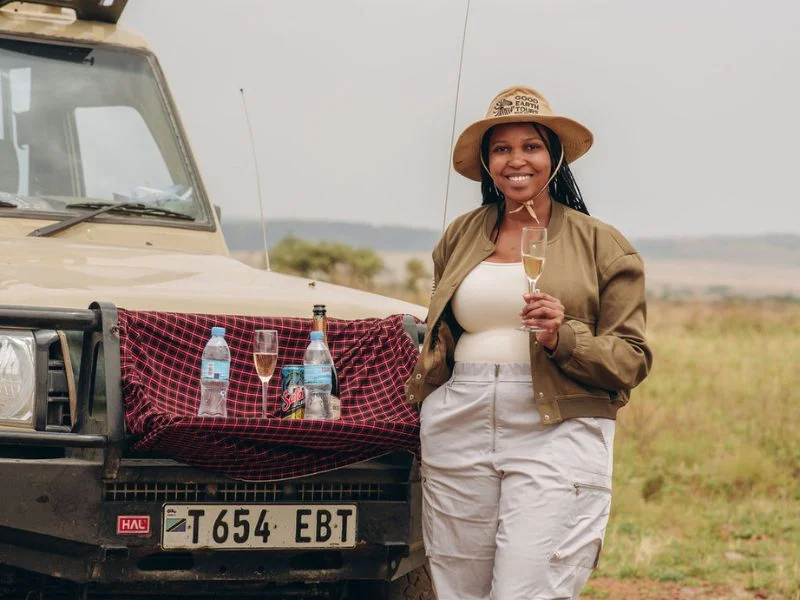
Khaki is the classic, but definitely not the only option. Earth tones in general work beautifully on safari. Soft olives, muted browns, sandy beige, warm taupes, and other similar hues! These shades blend just as well with the landscape and give you more variety when packing.
Greens are especially practical. They echo the natural bush, hide dust, and feel a little fresher than standard khaki. Lighter browns and stone colors also keep you cool under the sun while staying low-key. Even a soft gray can work, as long as it isn’t too dark.
Common Safari Clothing Mistakes to Avoid
Packing Bright Colors
One of the most common first-timer mistakes is packing bright, flashy clothes. They might look great at home, but they work against you in the field. Wildlife notices movement and contrast. Bright reds, whites, and neon shades stand out against the natural landscape, making it harder to blend in during game drives and almost impossible to get close without alerting animals during bush walks.
Stick to the earthy palette covered above. The added benefit: neutral tones hide the dust and dirt that accumulates on every game drive. You will look considerably less disheveled by day three.
Forgetting Layers
Many first-time travelers assume Africa is consistently hot. Then the early morning game drive starts at 5:30am and the temperature is 10 degrees colder than they expected.
Even in the warmest months, mornings and evenings on safari can be surprisingly chilly particularly in the Serengeti, the Masai Mara, and high-altitude areas like the Ngorongoro Crater rim. A lightweight fleece, a zip-up jacket, or a warm pullover makes those dawn starts significantly more comfortable. You peel it off as the sun rises. This applies to everyone, and a neutral-toned jacket or pullover fits the earthy palette without any extra thought.
Overpacking
It is tempting to pack for every possible scenario, but overpacking is genuinely inconvenient on safari. Space in game drive vehicles is limited. Light aircraft between camps often have strict baggage weight limits typically 15kg including hand luggage, and sometimes less on smaller planes. Dragging a heavy bag through transfers also gets tiring fast.
The fix is straightforward: choose pieces that mix and match. A few well-chosen breathable shirts, one or two pairs of lightweight trousers, and a versatile layer will take you further than a bag full of single-use outfits. If the lodge offers laundry service (most do), you can pack even lighter.
Prioritizing Style Over Comfort
Some travelers focus so much on how they will look in photos that they end up in clothes that feel uncomfortable after two hours in a vehicle. Safari days are long. You are sitting for extended periods, getting in and out of vehicles, sometimes walking on uneven ground, and layering and de-layering as temperatures change. Clothes that pinch, rub, restrict movement, or trap heat make all of that noticeably worse.
For women, look for loose-fitting shirts, airy trousers, and shorts or pants with a bit of stretch that still give a flattering fit. For men, cargo pants with plenty of pockets, moisture-wicking shirts, and a comfortable button-down that works for both game drives and lodge dinners covers most situations.
Comfort and style are not in opposition on safari. The best pieces do both. But when you have to choose, comfort wins every time.
Choosing Heavy Fabrics
Heavy fabrics trap heat, take a long time to dry, and feel increasingly uncomfortable the longer you sit in them. Cotton blends, linen, and moisture-wicking technical fabrics are all better options. They keep you cool, move with you, and dry quickly if you wash them at the lodge in the evening.
The layering logic matters here too. Lightweight pieces that can be added and removed throughout the day give you far more flexibility than one heavy jacket you are stuck wearing all morning.
What to Wear: Outfit Ideas for Every Part of the Day
Morning Game Drives
The morning drive is the one that catches most first-timers off-guard. Departure is typically between 5:30 and 6:30am, well before sunrise, when temperatures are at their lowest. In the Serengeti and Masai Mara in June and July, pre-dawn temperatures can drop to 8 to 12 degrees Celsius even in peak safari season. At altitude the Ngorongoro Crater rim, for instance it can be colder.
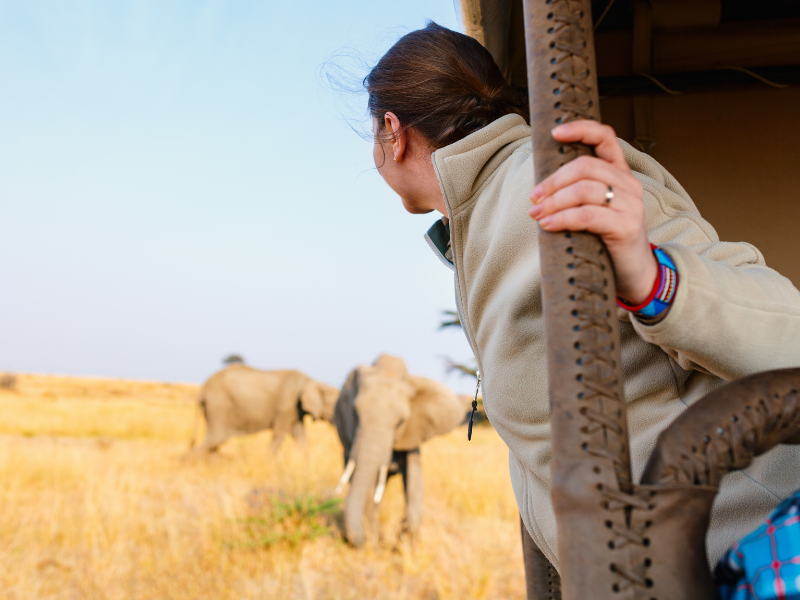
The practical approach is to dress for the coldest point of the drive and shed layers as the morning warms. Start with a base layer (a lightweight merino or moisture-wicking long-sleeved shirt), add a fleece or insulated mid-layer, and wear a windproof outer shell or packable jacket on top. Convertible trousers rather than shorts for the first hour. All of this goes into your day bag as the sun climbs.
By mid-morning roughly 9 to 10am you will typically be down to a single long-sleeved shirt, which then does the work of sun and insect protection for the rest of the drive.
The specific items worth having for a morning drive:
- Fleece or insulated mid-layer: the single most important piece most people leave out
- Buff or neck gaiter: wind chill in an open vehicle at speed is real; covering the neck makes a significant difference
- Gloves: lightweight liner gloves for the first hour on very cold mornings are not overkill; pack them small in a side pocket
- Convertible trousers: start with the full leg on, zip to shorts by mid-morning
- Wide-brimmed hat : transitions from cold-morning wind protection to sun protection as the day builds
Evening Game Drives
Evening drives run from roughly 3:30 or 4pm to just after sunset, typically returning to camp around 6:30 to 7pm. The drive starts warm afternoon temperatures in most East African parks are in the mid-to-high 20s Celsius and ends cold fast. The 40 minutes after the sun drops are when most people wish they had brought one more layer.
The evening drive also has a different visual quality. Golden hour light is when most of the best safari photography happens, which means what you are wearing will be in more photos than at any other time of day. This is worth thinking about lightly not to the point of prioritizing appearance over comfort, but enough to choose a clean layer rather than whatever is dustiest in the bag.
Evening drives also tend to have higher insect activity in areas near water or dense vegetation. A long-sleeved layer as the light fades is practical for this reason, not just warmth.
The specific items worth having for an evening drive:
- A layer you can put on quickly: temperatures drop within minutes of sunset; having it accessible in the vehicle rather than buried in a bag matters
- Long sleeves by dusk: combines warmth with insect protection as activity increases
- A neutral, clean outer layer: the golden hour photos argument; whatever you have that is least dusty and reasonably flattering
- Closed shoes: evenings attract more ground-level insects than mornings in many areas
One useful habit: keep your evening layer in a small bag under or beside your vehicle seat, not in the main luggage compartment. You will want it within reach without asking the guide to stop.
Bush Walks
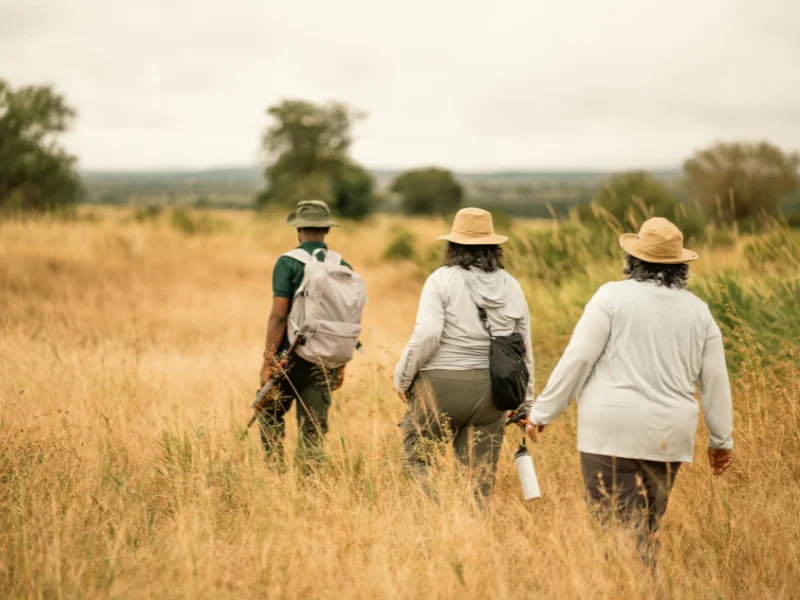
Bush walks require a bit more thought than game drives. You are on foot, at ground level, and moving through areas where insects are more present. Full coverage makes sense: long trousers (not shorts), a long-sleeved shirt, and closed shoes or light hiking boots. Convertible trousers that zip off at the knee are a practical option if the walk runs into the warmer part of the morning.
Around Camp and at Dinner
Most lodges have a relaxed atmosphere in the evenings. Softer cotton pieces, casual trousers, or a cozy layer for the cooler hours after sunset work well. There is no need to bring formal clothing — but a clean, comfortable outfit that is a step up from your dusty game drive clothes makes the transition feel like part of the experience.
Stick to earthy tones in the evenings too. You are still in the bush, and some lodges are unfenced.
Fabric and Fit: What Actually Matters
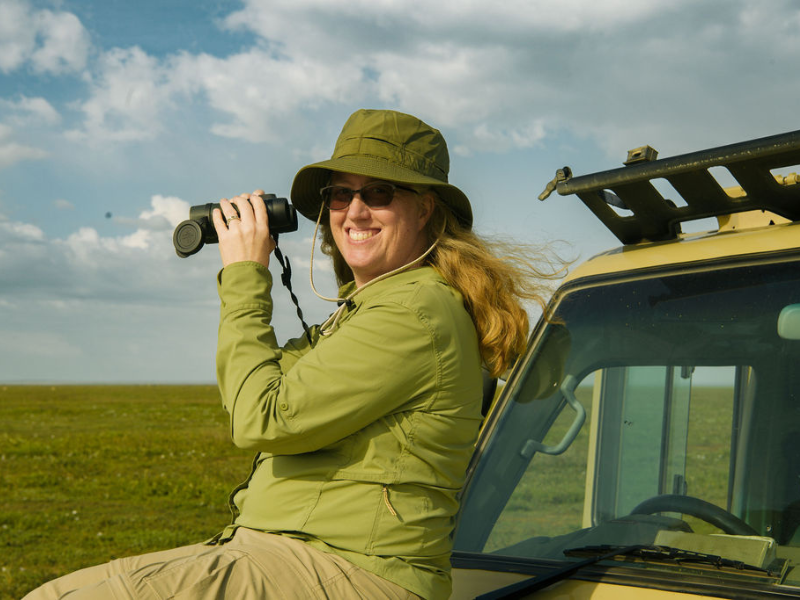
Light, breathable materials cotton, linen, and moisture-wicking blends — are the practical choice for almost everything on safari. They stay cool as the temperature rises, wash easily in a sink if needed, and dry overnight. Avoid heavy fabrics that trap heat, and avoid synthetic materials that feel sticky against the skin after a few hours in the sun.
Fit matters for comfort across a long day. Clothes that are slightly loose move with you and keep air circulating. Clothes that fit well but not tightly are the sweet spot neither restrictive nor shapeless.
A few specific things worth looking for when buying safari clothes:
- Long-sleeved shirts with roll-up tabs: gives you the option to ventilate without switching shirts
- Convertible trousers with stretch fabric: easy in and out of vehicles, manageable on uneven terrain, adjustable as the day warms
- UV protection built into the fabric: useful under the equatorial sun for anyone sensitive to it
- Reinforced knees or double stitching: worth it if you are planning bush walks or more active days
What to Wear on Safari Besides Color
Fabric & Function Matter More
Light, breathable materials; cotton, linen, and moisture-wicking blends are the practical choice for almost everything on safari. They stay cool as the temperature rises, wash easily in a sink if needed, and dry overnight. Avoid heavy fabrics that trap heat, and avoid synthetic materials that feel sticky against the skin after a few hours in the sun.
Fit matters for comfort across a long day. Clothes that are slightly loose move with you and keep air circulating. Clothes that fit well but not tightly are the sweet spot neither restrictive nor shapeless.
A few specific things worth looking for when buying safari clothes:
Reinforced knees or double stitching: worth it if you are planning bush walks or more active days
Long-sleeved shirts with roll-up tabs: gives you the option to ventilate without switching shirts
Convertible trousers with stretch fabric: easy in and out of vehicles, manageable on uneven terrain, adjustable as the day warms
UV protection built into the fabric: useful under the equatorial sun for anyone sensitive to it
Style & Comfort for Game Drives and Camps
Talking about clothes for safari, comfort is just as important as style. Dust, dirt, and bumpy roads are part of the adventure, and your outfit should be able to handle all of that while still keeping you comfortable. Think something like loose trousers, a breathable shirt, and a light jacket.
Around camp, you can relax the look. Slip into soft cotton tees, casual shorts, or a cozy hoodie for cool evenings. Many lodges have a laid-back atmosphere, so there’s no need to overdress. Still, it’s smart to keep things practical. You want options that can be layered easily.
Top Picks for Safari Khaki Clothes
Best Safari Shirts and Pants for Comfort and Style
Safari Shirts- Lightweight, long-sleeved shirts with roll-up tabs are a classic. Ventilation panels or mesh underarms are also worth looking for; they keep airflow moving when it gets hot. Some modern African safari clothes even come with UV protection built in, which is a bonus under the strong equatorial sun.
Safari Pants- Convertible pants that zip off into shorts are a lifesaver. Mornings can be chilly, and by noon, you will be grateful to switch to something lighter. Stretch fabrics are another win; climbing into safari jeeps or walking on uneven terrain becomes far easier. Reinforced knees or double stitching will also extend the life of your safari clothes for Africa, especially if you plan on bush walks 🌳

Recommended Brands with Functional Safari Wear
- Columbia- Affordable safari clothing + good quality.
- Patagonia- A bit pricier, but super comfortable.
- REI– The go-to for outdoor gear.
- Sapmok- Footwear for every adventure.
- Craghoppers- Known for their insect-repellent technology woven into fabrics.
- PrAna & Royal Robbins- For sustainable fabrics and relaxed fits.
Read our blog on The Best Places to Get Safari Clothing in the US to know more.
Packing Tips for Neutral and Layered Looks
The basics are covered above; neutrals, layers, lightweight fabrics. A few specific tips that make a real difference:
- Pre-roll complete outfits rather than individual pieces. Roll a shirt and trousers together. When you pull them out of the bag, the outfit is ready and you have not spent ten minutes pairing things in dim morning light.
- Pack a quick-dry buff instead of multiple scarves. It works as a face covering on dusty tracks, a neck warmer on cold mornings, and a headband when it warms up. One piece, three uses.
- Choose convertible trousers in stretch fabric. The fabric pull when climbing in and out of a high safari vehicle is real. Stretch panels in the knees make it considerably easier.
- Bring a thin, packable rain shell even in the dry season. Unexpected showers happen. A packable shell takes up almost no space and saves you on the one afternoon it pours.
- Use zip-off sleeves, not just zip-off trousers. Both give you flexibility as the temperature shifts through the day.
- Stash a microfibre cloth in your daypack. Not just for your camera lens, it wipes dusty sunglasses, binoculars, and a sweaty face mid-drive without the scratch risk of tissues or your shirt hem.
- Pre-treat trousers and shirts with fabric-safe insect repellent before you pack. It dries before you arrive and means you are already protected from day one without any extra steps at the lodge.
Shoes get overlooked in most packing guides. Bring one pair of sturdy neutral boots or trail shoes for bush walks and active days, plus lightweight slip-ons or sandals for camp. Two pairs is enough for most trips.
Final Thoughts: Safari Style That’s Smart and Stylish
Khaki Isn’t Mandatory, But Practical Wins
See, you don’t have to dress head-to-toe in khaki to enjoy your safari, nor is the goal to match an old movie poster. It’s to stay cool & comfortable, prepared for long days outdoors.
When (and When Not) to Worry About What You Wear
Some moments call for practical thinking, of course, but there’s definitely no need to overthink every outfit. Pack thin & thick layers for game drives and bush walks, and keep things relaxed for the camp. That’s all. Save the rest of your energy for the adventure itself 💚
And regarding the planning for your safari, no need to worry about that either. We, at Good Earth Tours, will take care of everything 😉