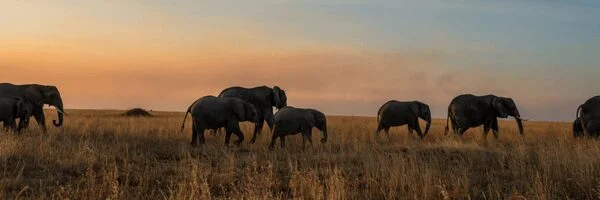
Queen Elizabeth National Park Safari Guide
If you’ve been dreaming about a safari that feels raw and diverse but a little unexpected, Queen Elizabeth National Park might just surprise you (in the best way).
Wildlife doesn’t stick to a script here. One moment you’re cruising past elephants along open savannah, the next you’re gliding through a water channel as hippos yawn inches away. Add tree-climbing lions (yes, really), crater lakes, and constantly changing scenery, and you’ve got a park that keeps you curious from start to finish.
Queen Elizabeth National Park sits right at the heart of Uganda and somehow manages to pack an incredible range of experiences into one destination, a favorite for travelers who appreciate scenery just as much as wildlife.
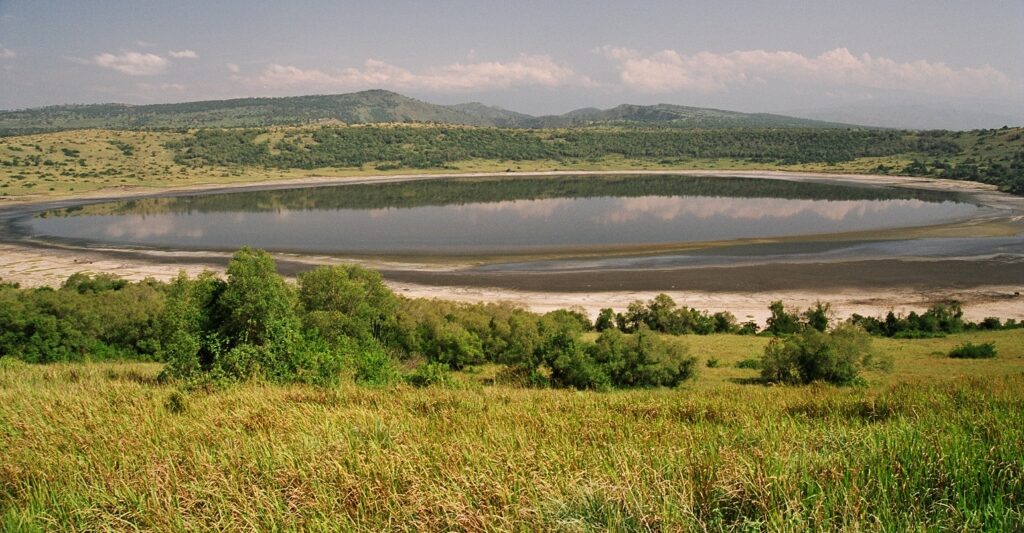
Where is Queen Elizabeth National Park in Uganda?
Queen Elizabeth National Park Location (and the easiest ways to get there)
Queen Elizabeth National Park lies in western Uganda, right along the western arm of the Great Rift Valley. It stretches between Lake Edward and Lake George, with the snowcapped Rwenzori Mountains often appearing on the horizon on clear days.
The speciality of the Queen Elizabeth National Park safari setting lies in its central location. The park lies between Kasese, Mweya, and Ishasha, placing it perfectly on many Uganda safari routes. You can pair it easily with chimp trekking in Kyambura Gorge or gorilla trekking in Bwindi, as well as a scenic stopover near crater lakes and tea plantations.
Despite its size and diversity, the park is surprisingly accessible. Most travellers reach it by road from Kampala or Entebbe, usually as part of a multi-day safari circuit. Domestic flights into nearby airstrips like Mweya or Kasese also make it convenient if you’re short on time.
What Makes Queen Elizabeth National Park Special
The Park’s Landscapes and Why it Feels So Varied
The park’s incredible scenery is one reason why it is so popular. This is not a one-note park; within a single day, you can move from wide open savannah to volcanic crater lakes, dense fig trees, wetlands, and lush riverbanks, all without feeling like you’ve left the same reserve.
Because Queen Elizabeth National Park is located in a geologically complex zone (shaped by ancient volcanic activity and the Great Rift Valley), the landscapes feel deeply layered.
Water plays a huge role here too. Lakes Edward and George, along with the Kazinga Channel, attract wildlife year-round, so it’s basically a mix of ecosystems (savannah + forest + water + crater-dotted hills).
Queen Elizabeth National Park Size (and what that means for your safari)
The sheer scale is another reason why safari here feels so varied. 2,000 square kilometers is the Queen Elizabeth National Park size, making it one of Uganda’s largest protected areas. Best of all, it doesn’t feel crowded or compressed.
Dramatic size means more space… more space for wildlife, landscapes, and activities. Each area has its own rhythm (no blurred landscapes or repetitive schedules). Even during peak travel months, the park absorbs visitors well, so your Queen Elizabeth National Park safari still feels just as immersive 😉
Queen Elizabeth National Park Activities
Game Drives in Queen Elizabeth National Park
The Queen Elizabeth National Park delivers game drives unlike any other safari destination, happening usually early in the morning or late in the afternoon, when wildlife is most active (and the lighting is at its best).
Considering its versatile settings, the park offers the most interesting sightings to cover. Think stunning golden-hour light moments, elephants + buffalo herds crossing tracks without warning, and Uganda kob everywhere (with predators nearby).
Best of all, drives here never feel rushed, thanks to the huge park size. Guides have room to adjust routes based on your preferences.
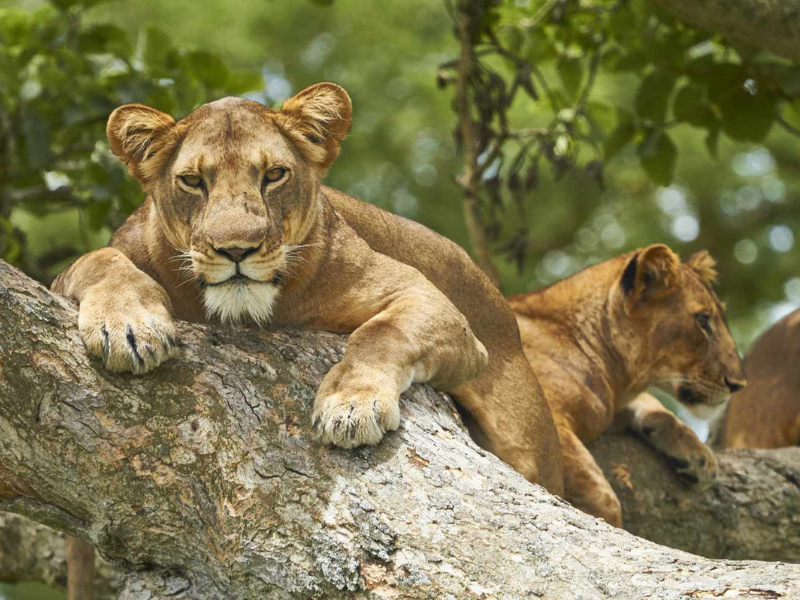
Boat Safari on the Kazinga Channel
If game drives show you wildlife on land, a Queen Elizabeth National Park safari boat cruise shows you how alive the water really is. The Kazinga Channel links Lake Edward and Lake George, and it’s one of the most reliable places in the park for close-up sightings, without needing to search.
Kazinga Channel is particularly famous for its density of life… hippos, crocodiles, elephants, buffalo, you name it! Birdlife is everywhere, too, from African fish eagles to colorful kingfishers skimming the surface. And again, the pace is slow, so you can take it all in 😉
Surely one of the standout Queen Elizabeth National Park activities.
Optional Add-Ons (Community Visits, Crater Lakes, Scenic Stops)
One of the nicest things about a Queen Elizabeth National Park safari is how easy it is to slow things down and add texture to your days. Beyond game drives and boat cruises, there are small add-ons that help you see what surrounds it.
Community visits, for example, offer a chance to step outside the park gates and connect with local life. These are simple, respectful experiences. Crater lakes are another quiet highlight. Scattered across the landscape, they add a softer, scenic pause between activities. Some are perfect for short walks or photo stops. Others are ideal picnic breaks with wide views. Then there are the scenic stops. Tea plantations, roadside viewpoints, and relaxed lakeside moments that let your trip breathe.
Queen Elizabeth National Park Animals
What Wildlife You’re Most Likely to See
You don’t need extreme luck or endless driving to catch the most exciting wildlife sightings on a Queen Elizabeth National Park safari. Wildlife here is active and spread across various habitats, with elephants, buffalo, and Uganda kob among the most common Queen Elizabeth National Park animals. You’ll see them often, sometimes in large numbers, moving calmly through open plains or gathering near water. These herds also attract predators, so lion sightings (especially around Kasenyi and Ishasha) are a real possibility.
Hippos and crocodiles dominate the waterways, particularly along the Kazinga Channel, and birdlife is abundant, too, adding constant movement and sound to the landscape, even when the larger animals are resting 😉
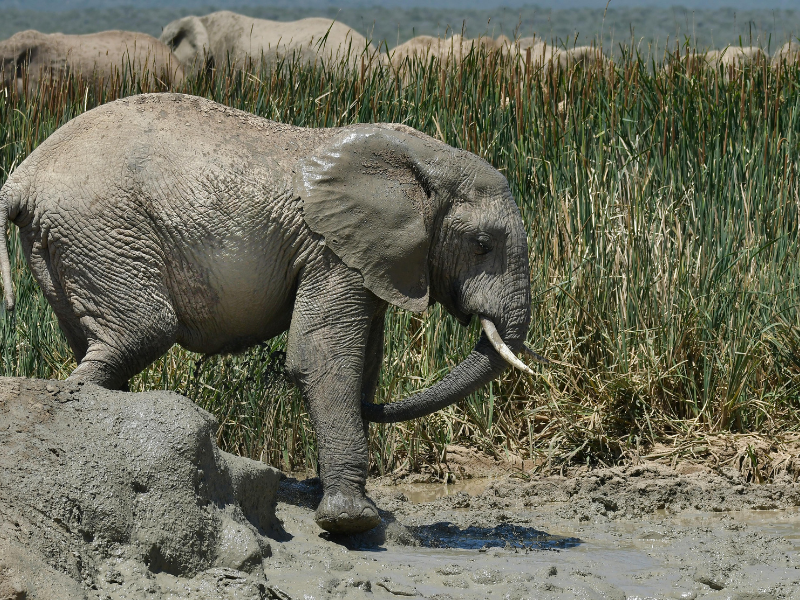
Tree Climbing Lions: Where to Look (and realistic expectations)
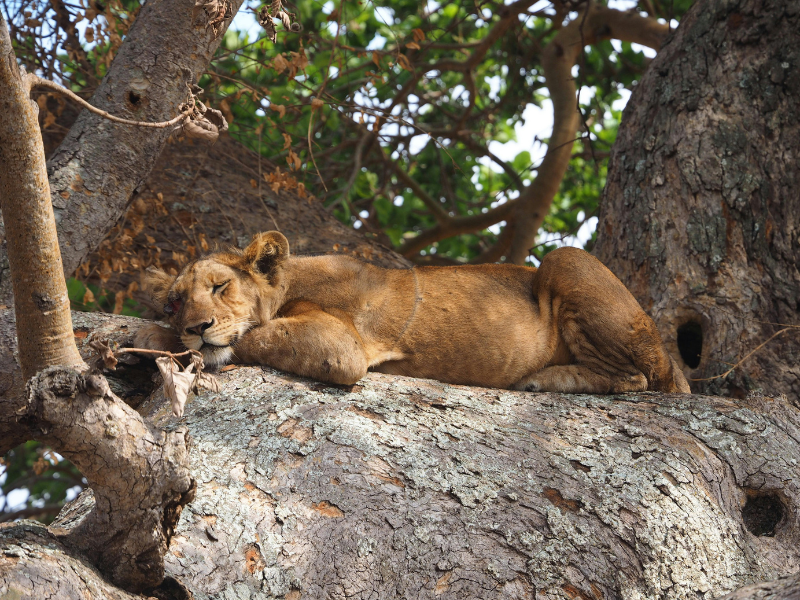
One of the most talked-about highlights of a Queen Elizabeth National Park safari is the chance to see lions resting in trees, a sight found at only a few places in Africa. These famous sightings happen mainly in the Ishasha sector, a quieter southern area of Queen Elizabeth National Park in Uganda where large fig trees provide shade and vantage points above the grasslands.
The idea sounds dramatic, but expectations matter. Tree-climbing lions are not guaranteed sightings. Some days they’re easy to spot, stretched across branches like oversized house cats. Other days, they stay hidden in tall grass or move during cooler hours when drives aren’t active. Patience and timing make all the difference.
Best Time to Visit Queen Elizabeth National Park
Dry Season vs. Green Season: What Changes
Though the park is open year-round, the experience shifts significantly between seasons. For example, during the dry seasons (roughly June to September and December to February), wildlife becomes easier to spot. Plus, overall conditions are more favorable (shorter grass, smoother roads, and better temperatures). But that doesn’t mean it’s the “single” best season. The green season (March to May and October to November) has its own perks. Rain transforms the park into lush shades of green, and crater lakes look fuller. Not to forget the incredible birdlife sightings- a treat for photographers! Best of all, the crowds thin out greatly, so you can capture all the moments on a slower, more immersive pace.
When to Go if You’re Combining with Gorilla Trekking
Many travellers include a Queen Elizabeth National Park safari as part of a larger Uganda itinerary, especially when pairing it with gorilla trekking in nearby Bwindi Impenetrable Forest. And if you’re also planning something like that, then the dry seasons (June to September and December to February) are usually the easiest months to combine both experiences.
How to Fit Queen Elizabeth National Park Safari into a Uganda Safari
Best pairings (Bwindi, Kibale, Murchison, etc.)
The biggest advantage of a Queen Elizabeth National Park safari is how naturally it connects with other destinations across Uganda, so you can build a well-rounded safari super easily.
Here are the best pairings that work absolutely incredibly…
- Bwindi Impenetrable Forest- For gorilla trekking
- Kibale Forest National Park- For chimpanzee trekking
- Murchison Falls National Park- For waterfall views and Nile River boat safaris
How Many Nights Do You Need
The ideal length of a Queen Elizabeth National Park safari depends on how relaxed you want the experience to be, but most travelers find that two to three nights strikes the perfect balance.
Quick FAQs
Is Queen Elizabeth good for first-time safari travelers?
Absolutely. It is, in fact, one of the best introductions to safari travel in East Africa. The park offers a little bit of everything without feeling overwhelming, and there’s so much flexibility!
Is it worth it if you’re already doing gorillas?
A Queen Elizabeth National Park safari often makes a gorilla trekking itinerary feel more complete. Though gorilla trekking is incredibly special, it often focuses on a single experience in dense forests. Adding Queen Elizabeth National Park, Uganda, brings contrast. Think lovely landscapes, classic wildlife sightings, and a slower rhythm.