Incredible Animals in the Kalahari: What to See on Safari in This Iconic Desert
Although there are many, and arguably a couple of better-known, deserts in Africa, there’s something truly special about the Kalahari.
The Kalahari Desert is undoubtedly one of nature’s greatest masterpieces. Stretching across Namibia and Botswana, this semi-arid wonderland has won the hearts of travelers from all around the world and has quickly made its way to the list of top African destinations.
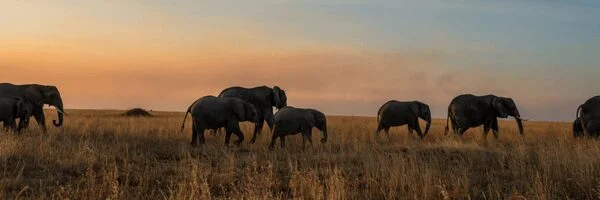
Animals in the Kalahari, in particular, are one of the most interesting sights to come across. It’s not a place that will disappoint you, so if you’re planning your journey in hopes of seeing and learning more about wildlife, we’ve got just the right guide for you.
Where is the Kalahari Desert, and What Makes it Unique?
Location and Size
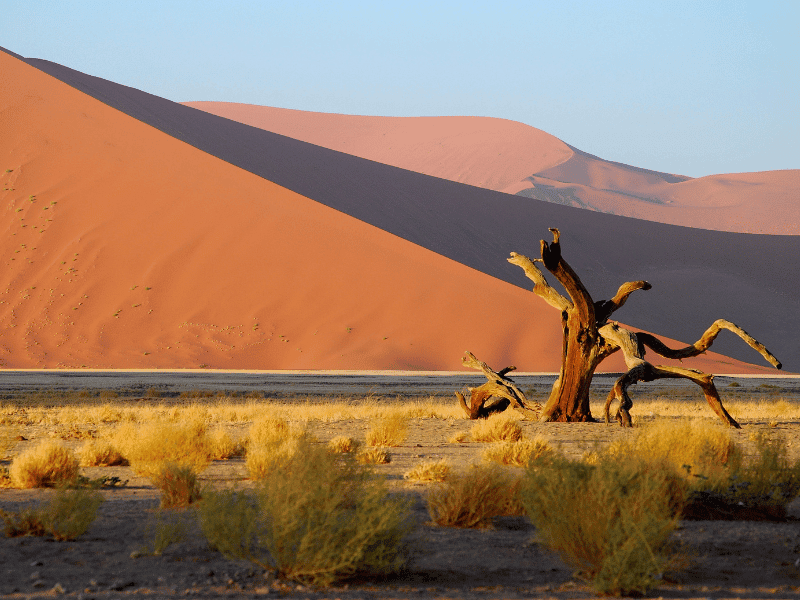
The Kalahari Desert sprawls across Southern Africa, covering a massive area of around 900,000 square kilometers. To put that into perspective, it stretches over Botswana, much of Namibia, and parts of South Africa. Some even say it dips into Angola and Zimbabwe at its edges. It’s not a small pocket of sand, but a giant, golden tapestry woven across the continent.
But here’s the thing: despite its name, the Kalahari isn’t a true desert. Surprised? While it features the dramatic landscapes you’d expect, it actually receives a decent amount of rain compared to typical deserts, which is why it is more accurately described as a semi-arid savanna. And that’s exactly what makes it so special.
When travelers ask what animals live in the Kalahari Desert, the answer is deeply tied to its size. Because it’s so expansive and spans different ecosystems, the animals of the Kalahari Desert are beautifully diverse. We’ll dive deeper into its wildlife shortly, but until then, just know that its sheer size means endless opportunities for breathtaking sightings, so be prepared for the unexpected at every turn.
Read more on The Best Time to Visit Botswana.
Climate and Terrain
Think the Kalahari Desert is just scorching hot sands under a blazing sun? Think again. This desert has a personality, and quite a complex one at that.
During the day, especially in summer, temperatures can soar above 40°C (104°F). But as the sun dips below the horizon, the heat vanishes into the vast skies, and nights turn surprisingly cold, sometimes dropping below 0°C (32°F) in winter. We’d say that’s the beauty of it. A place of extremes where you’ll need both your sunscreen and a warm jacket on your safari drives 😉
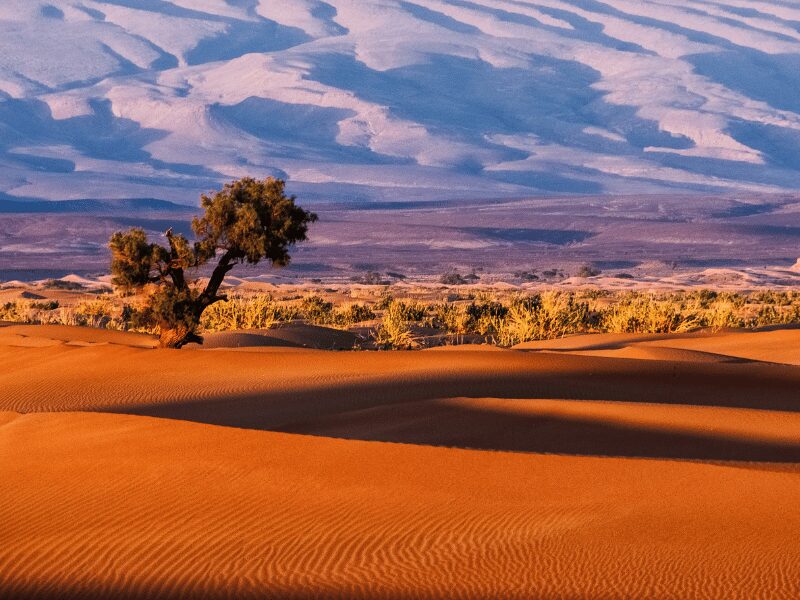
Talking about the terrain, the best way to imagine it is to think of a patchwork quilt of landscapes, each more captivating than the last. Sure, you’ll find stretches of iconic red dunes rippling across the horizon, but these are interspersed with sweeping grasslands, dry riverbeds, fossil watercourses, and thorny acacia woodlands.
5 Quick Facts about the Kalahari Desert
1. Home to the San (Bushmen) People- One of the oldest cultures in the world, the San people have lived in the Kalahari for thousands of years. Perhaps credit goes to their deep knowledge of the land, wildlife, and plants allows them to thrive in this environment, where others might struggle to last a day.
2. Rich in Wildlife (Not Barren at All)- Despite what you might imagine when you hear “desert,” the Kalahari is teeming with life.
3. Has Seasonal Rivers Like the Nossob- Yes, there are rivers here! Most of them remain dry for most of the year, but seasonal rivers like the Nossob bring life to the landscape.
4. Nights Can Drop Below Freezing in Winter- Deserts are scorching hot, but the Kalahari is one of the exceptions. Winter nights can dip below 0°C (32°F)!
5. Supports Both Predators and Herbivores- The Kalahari is a land of balance. Here, you will find powerful predators sharing the terrain with herbivores, each perfectly adapted to survive in this semi-arid wonderland.
What Animals Live in the Kalahari Desert?
Predators of the Kalahari
The most spectacular part of this red sand kingdom is the predators of the Kalahari. Powerful. Majestic. And utterly captivating.
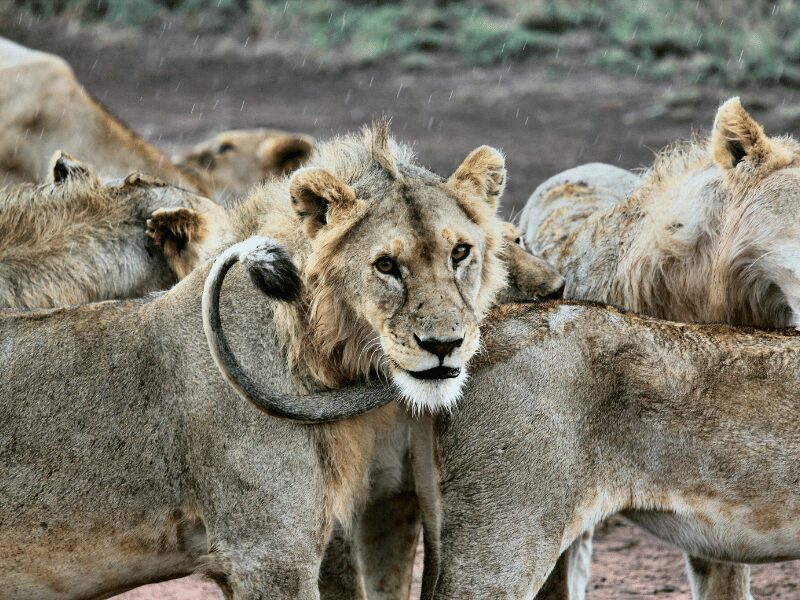
Kalahari Lions. An incredibly iconic species of the desert is the black-maned lion. Slightly larger and hardier than their savanna cousins, they are perfectly adapted to the desert’s extremes. Seeing a pride lounging under acacia trees or stalking springbok across the dunes is a sight that stays with you forever.
Cheetahs. The Kalahari is one of the best places to spot cheetahs. These sleek hunters thrive in the open grasslands and fossil riverbeds, where their incredible speed gives them an advantage.
Leopards. Stealthy and elusive, leopards prowl the desert’s thorny woodlands and riverbeds, perfectly camouflaged by dappled light. They’re masters of ambush hunting and one of the most beautiful animals that live in the Kalahari Desert.
Brown Hyenas. You’ve probably heard of spotted hyenas, but the Kalahari is known for its shaggy-coated brown hyenas. Often seen at dawn or dusk, they’re expert scavengers and surprisingly shy, unlike their noisy cousins.
Wild Dogs. Though rarer, African wild dogs roam parts of this desert, traveling in highly coordinated packs. Their hunts are a testament to teamwork, and spotting them is a true safari highlight.
Iconic Herbivores and Gravers
The animals of the Kalahari Desert aren’t all fierce hunters. This vast land is also home to graceful herbivores & hardy grazers.
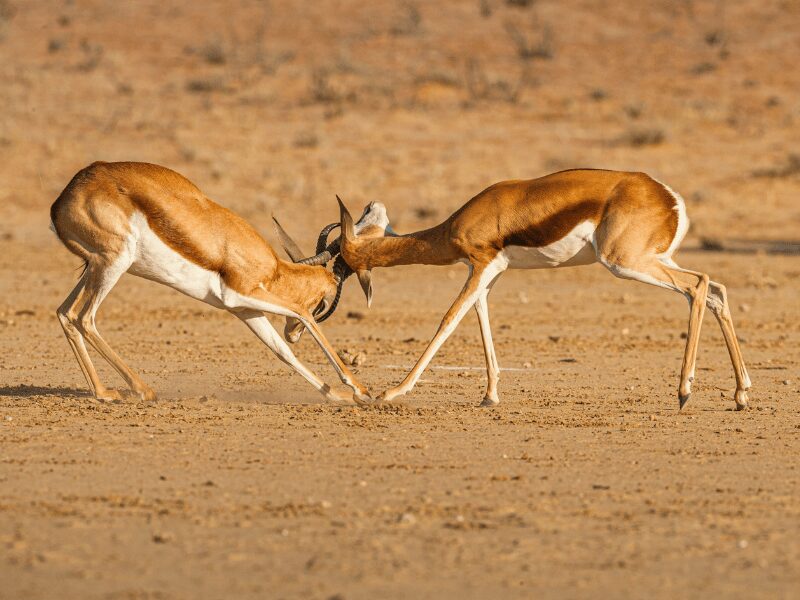
Taking a closer look, there’s the springbok, an elegant antelope known for its impressive leaps (a behavior called pronking). Equally stunning is the oryx, which has striking black-and-white facial markings and long, spear-like horns. They’re perfectly adapted to desert life and can survive without drinking water for weeks.
You will also spot blue wildebeest grazing in the herds, supporting the predators of the Kalahari. Then there are giraffes and elands, too, both calm and gentle but massive.
Check out our Favorite Bucket List Safaris in Africa.
Small Mammals and Desert Survivors
Among the majestic animals of the Kalahari Desert live smaller creatures that are just as fascinating. Take the meerkats, for example. These charismatic little mammals are famous for their upright sentry stance, keeping watch for predators while the rest of the group forages.
Then there are bat-eared foxes, with their oversized ears that help them hunt insects at night and keep cool during the day. Quick, shy, and incredibly cute, they’re desert survivors through and through. You might also spot ground squirrels darting around, digging burrows to escape the heat, and the secretive aardwolf, a termite-eating hyena relative that roams quietly under the cover of darkness.
These small mammals may not steal the spotlight like lions or cheetahs, but their incredible adaptations remind us that life in the Kalahari is about resilience, no matter your size.
Reptiles and Birds of the Kalahari
Some of the most intriguing animals that live in the Kalahari Desert are its reptiles and birds.
Reptiles in the Kalahari are built for the extremes. Think quick-footed sand lizards that vanish in a blink, and the striking Cape cobras gliding silently across the dunes. Even the tortoises here, like the Kalahari tent tortoise, have mastered the art of desert living, slowly navigating the sands with calm determination.
Not to forget the birdlife that colors the skies beautifully. As dawn breaks, the desert air fills with life. The crimson-breasted shrike, with its vivid red chest, flits between thorn trees. On the ground, Kori bustards, the heaviest flying birds in Africa, stride with an almost royal grace, while the ever-watchful Pale Chanting Goshawk scans the plains for prey from its high perch.
Look closely, and you’ll find entire communities of sociable weavers, their giant nests draping acacia branches like giant straw blankets, home to hundreds of birds in perfect harmony. And as night falls, the desert’s quieter residents emerge, from stealthy owls to nocturnal nightjars.
Truly, what animals live in the Kalahari Desert goes far beyond what meets the eye on a typical game drive ✨
How do Kalahari Animals Survive Harsh Conditions?
Behavioral Adaptations
Many Kalahari animals are masters of timing. Predators like lions and cheetahs hunt early in the morning or late in the evening to avoid the scorching midday heat. Small mammals, such as meerkats and bat-eared foxes, adjust their activity patterns to cooler times of day, spending the hottest hours resting in burrows or shade.
Even birds adapt cleverly. Sociable weavers build massive nests with thick roofs to keep their communal homes cool by day and warm at night. And reptiles, like sand lizards, bask in the early sun to warm up before retreating under bushes when temperatures peak.
Physical Adaptations
Of course, behavior alone isn’t enough. The animals in the desert are built to survive here, right down to their bones and skin.
Many Kalahari desert animals have light-colored coats to reflect the harsh sun, like the sandy-toned springbok and oryx. Oryx, in particular, has a special nasal structure that cools down the air they breathe, helping them conserve precious body moisture.
Small mammals, such as meerkats, have dark patches around their eyes to reduce glare when scanning the bright landscape for predators. Meanwhile, reptiles like the Cape cobra have scales that protect them from hot sand and retain moisture.
Lions have adapted, too. They are slightly larger, with thicker manes, which help them cope with cold desert nights while asserting dominance within prides.
Where to See Kalahari Wildlife on Safari
Kgalagadi Transfrontier Park (South Africa/Botswana)
For those of you who want to witness the animals of the Kalahari Desert in their element, Kgalagadi Transfrontier Park is the place to be. Straddling the borders of South Africa and Botswana, this park is famous for its dramatic red dunes and thriving wildlife. It’s one of the best spots to see black-maned Kalahari lions in action, along with cheetahs, gemsbok, and countless bird species.
Game drives here are a photographer’s dream, offering clear skies, open landscapes, and incredible predator-prey interactions. Plus, the park is far less crowded than many other African reserves, giving you a more intimate safari experience.
Central Kalahari Game Reserve (Botswana)
The heart of the desert, and one of the largest protected areas in the world. A place of true wilderness, where you can experience the vastness of the desert like nowhere else.
This reserve is also famous for its remoteness. It’s perfect if you’re looking for that feeling of being completely immersed in the untouched African wilderness.
Wondering if there are Tigers in Africa? Check out our blog to know more.
Final Words
Ready to witness the awe of the animals in the Kalahari? At Good Earth Tours, we specialize in crafting unforgettable Kalahari safari experiences, taking you deep into this iconic desert to see its wildlife wonders up close. Book your safari today 🤍