Family Safaris in Africa: Best Destinations, Ages, Timing, and What to Expect
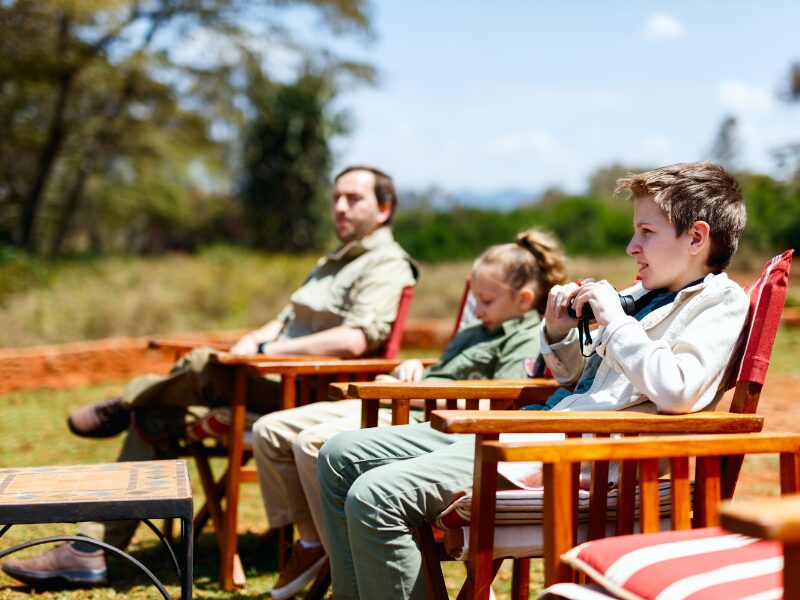
Planning a family vacation that genuinely works for everyone kids, parents, and grandparents is harder than it sounds. A safari makes it easier than most trips, because the experience is built around shared attention. You are all looking at the same lion. You are all watching the same crossing. There are no screens competing for anyone’s focus.
Africa also has the practical advantages that families need: lodges built around kids, guides who know how to keep younger travelers engaged, and enough variation in destination and pace that you can tailor the trip to your family’s age range and energy level.
South Africa has malaria-free reserves ideal for younger children. Tanzania has the Great Migration. Kenya has the density of wildlife that produces sightings fast, which matters when you have a seven-year-old in the back seat. Botswana has something almost no other destination offers: the chance to watch elephants from a boat.
This guide covers the best family safari destinations across Africa, what age works best, when to go, and how to make the experience work for kids of every age group.
What Makes a Family Safari Different
A family safari is not a standard itinerary with kids added to it. The logistics, the lodge, the timing of drives, and the choice of destination all shift when you are traveling with children.
The good news is that most of this is handled before you arrive. Experienced operators and family-oriented lodges design the itinerary around your kids’ age and attention span, not the other way around. Game drives are shorter. Guides know how to make the experience interactive. Lodges have pools, junior ranger programs, and mealtimes that do not require children to wait.
A few specific things to look for when booking:
- Family suites or interconnecting rooms: space matters at the end of a long day
- Child-friendly menus: most family lodges accommodate fussy eaters
- Junior ranger programs: structured activities where kids earn badges, learn animal tracking, and get hands-on conservation education
- Pool access: essential for the midday rest window when game drives are done and energy needs somewhere to go
- Malaria-free location (if traveling with children under 6): more on this in the destinations section
Best Destinations for a Family Safari in Africa
South Africa
South Africa is one of the most practical family safari destinations on the continent. The infrastructure is excellent, the distances between parks are manageable, and several of its best reserves are malaria-free, which removes one of the main concerns parents have when traveling with younger children.
Madikwe Game Reserve: One of the best options for families with younger children. Madikwe is malaria-free, has all of the Big Five, and receives far fewer visitors than Kruger, which means game drives feel more intimate. Lodges like Madikwe Safari Lodge tailor activities specifically to children, including bug hunts, storytelling around the fire, and guided nature walks around camp. It is a good first safari destination for families who want high wildlife quality without the logistics complexity of East Africa.
Kruger National Park and Sabi Sands: Kruger is the widest safari in South Africa 7,576 square miles and offers an enormous range of accommodation options across different budgets. Families who want the most exclusive experience should look at the private reserves bordering Kruger, particularly Sabi Sands. Unlike Kruger’s main park, Sabi Sands allows off-road driving and night game drives, and the absence of crowds makes sightings feel genuinely personal. It is among the best places in Africa to see leopards.
For families with older children and teenagers, Sabi Sands is the stronger choice. For families with younger kids who want flexibility and lower cost, Kruger’s self-drive option is worth considering the roads are well-maintained and the park is easy to navigate independently.
Pilanesberg National Park: Close to Johannesburg, making it a practical choice for families who want to minimize travel time. The park has over 300 bird species for budding ornithologists, shorter game drives well-suited to younger attention spans, and safe picnic areas for family breaks. It is a good option for a shorter trip or as part of a wider South Africa itinerary that includes Cape Town.
Addo Elephant National Park: Famous for its large elephant herds and a genuine hit with kids. The park’s visitor centers have interactive elephant education programs, and it is possible to combine a Addo safari with a trip to the nearby coast for whale watching, depending on the time of year.
South Africa practical tip: For families traveling with children under 5, malaria-free Madikwe or Pilanesberg is the right starting point. For families with children aged 6 and up who want more wildlife intensity, Sabi Sands or Kruger opens up. Cape Town and the Garden Route are natural extensions for any South Africa family itinerary.
Tanzania
Tanzania is one of the best family safari destinations in Africa for one simple reason: the wildlife is extraordinary, and the lodges are built to match. The Serengeti and Ngorongoro Crater are within range of each other and can be combined on a single trip, giving families access to two of the continent’s most remarkable wildlife experiences without excessive transfers.
Serengeti National Park The Serengeti is year-round wildlife country. The Great Migration passes through for most of the year (more on timing below), but even outside migration windows, the lion population is the largest on the continent, and game drive quality is consistently high. Family lodges here have pools for the midday window, and many offer junior ranger programs and guided nature walks for kids.
Gibb’s Farm and Sayari Camp are both strong options for families, with amenities that cover both comfort and kid-specific programming.
Ngorongoro Crater The crater is a concentrated wildlife experience unlike anywhere else in Africa. Roughly 25,000 large mammals live within its walls, including all of the Big Five, and because the animals are used to vehicles, sightings can be remarkably close. Game drives here are shorter than in the Serengeti, which makes the Crater a particularly good fit for families with younger children who cannot sustain a long morning in the vehicle.
While you are in the area, the nearby Olduvai Gorge is worth a short stop, it is one of the most important paleoanthropological sites in the world and gives older kids a genuine “this is where humans come from” moment.
The Ngorongoro Crater Lodge is one of the best family accommodation options in the region, with stunning views, interactive programs, and a genuine sense of being inside something extraordinary.
Tanzania practical tip: Combine the Serengeti and Ngorongoro for a complete northern Tanzania circuit. Add Zanzibar at the end for families who want a beach finish, clear water, white sand, and a slower pace after the intensity of the parks.
Kenya
Kenya is one of the most popular family safari destinations in Africa, and the reasons are practical as much as they are scenic. Wildlife sightings in the Masai Mara happen fast, which matters when you are traveling with younger children. The reserve’s open savannah means there is almost always something to look at.
Masai Mara The Masai Mara accounts for the Kenya portion of the Great Migration route, with river crossings typically happening from late July through early November. Outside that window, big cat sightings lions, cheetahs, and leopards are among the most reliable in Africa. For families with children who will genuinely remember what they see, the Mara is hard to beat.
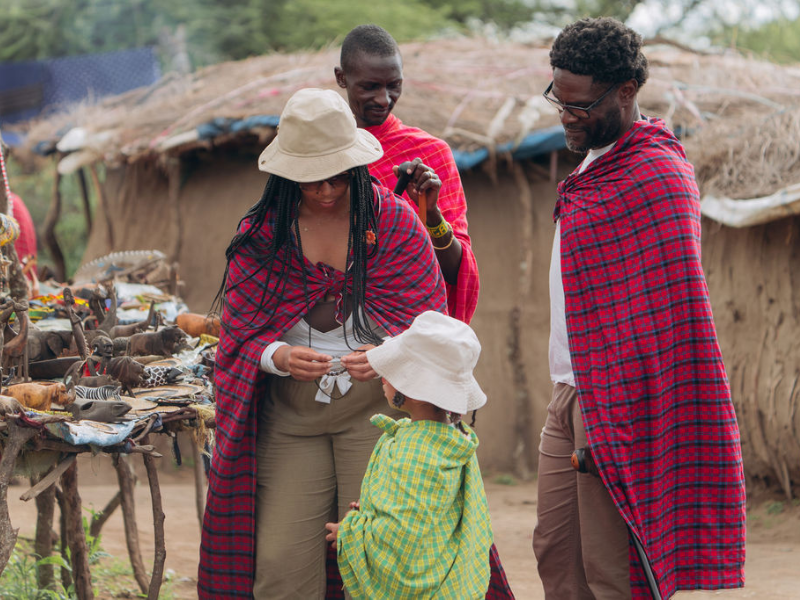
Many Mara lodges offer bushcraft lessons and Maasai warrior training sessions for kids, which are consistently the highlight for younger travelers who want something hands-on.
Amboseli National Park If your family’s priority is elephants, Amboseli is the answer. The park has over 1,600 free-roaming elephants, including some of the world’s last super tuskers. Its small size and open plains make wildlife easy to spot, and the drives are shorter than in the Serengeti — a genuine advantage for families with younger children. The backdrop of Mount Kilimanjaro makes this one of the most photographed parks in Africa.
There is an Observation Hill inside the park where families can stop, get out of the vehicle, and stretch. Worth building into the day.
Laikipia Plateau (Lewa and Ol Pejeta Conservancies) For families with older children who want more active experiences, the conservancies of Laikipia offer something the national parks don’t: camel rides, horseback safaris, and hands-on conservation programs where kids learn about wildlife protection in real time. It is a different pace from the Mara — quieter, more intimate, and more varied in what you can do each day.
Lewa Wilderness is a strong lodge recommendation for families in this region.
Kenya practical tip: Kenya’s coast, Watamu and Malindi makes a good beach add-on after safari. The Laikipia conservancies suit families with children aged 8 and up who want more than game drives. The Masai Mara is the right starting point for first-time Kenya families.
Botswana
Botswana is best suited to families with older children most lodges in the Okavango Delta and Chobe recommend a minimum age of around 6 to 8 for game drives, and some activities require children to be older. The payoff for that age threshold is significant: Botswana offers family safari experiences that are genuinely unlike anything available elsewhere in Africa.
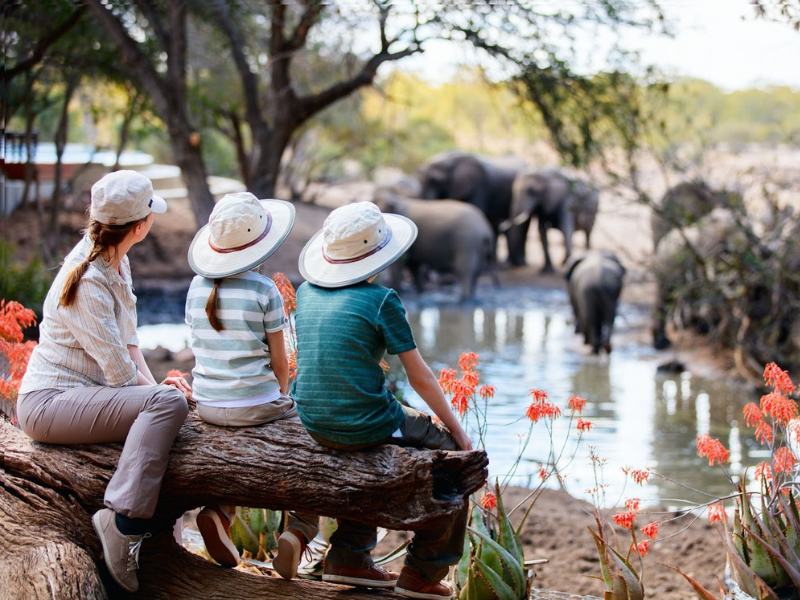
The Okavango Delta’s mokoro canoe rides and guided walking safaris are the most distinctive. Instead of watching wildlife from a vehicle, you are at water level, paddling through channels lined with papyrus, watching hippos and elephants from a completely different vantage point. Chobe National Park has the highest elephant concentration in Africa over 100,000 and sunset boat cruises along the Chobe River give families a relaxed way to watch herds come down to drink.
Lodges in Botswana are smaller and more exclusive than most of East Africa, which suits families who want privacy. Staff ratios are high, and the experience feels personal rather than hotel-like.
Botswana practical tip: Best for families with children aged 8 and up. Combine with a Zimbabwe stop at Victoria Falls if your itinerary allows two to three nights at the falls is enough to make an impression without breaking the pace of the trip.
The Right Age for a Family Safari
This is the question most parents ask first, and the honest answer is: it depends on the destination, the lodge, and what kind of experience you want.
Under 6 (Toddlers and Preschoolers)
Safaris with very young children are possible but require more careful planning. Most national parks in Africa have a minimum age for game drive entry, often around 6, and game drives can run two to four hours a long time for a toddler with nowhere to go.
If you are traveling with children under 6, the practical options are: malaria-free South African reserves (Madikwe, Pilanesberg) where the logistics are easier and the lodge facilities more forgiving; private conservancies with flexible drive lengths; and lodges that offer babysitting services and enclosed, safe outdoor areas.
What young children enjoy most on safari is often the simplest things zebras near the road, monkeys in camp, elephants splashing in a river. They do not need long drives. What they need is familiar routines, flexible meal times, and space to move.
Ages 6 to 12 (The Sweet Spot)
This is the age range where safari really delivers. Children in this bracket are old enough to follow instructions and understand what they are seeing, curious enough to ask the right questions, and genuinely moved by close animal encounters in a way that stays with them.
Early wake-ups feel exciting rather than exhausting. Short to medium game drives are manageable. Junior ranger programs, cooking sessions, and nature walks are designed for exactly this age group. Kids at this stage are also more open to new foods and cultures, which makes the broader experience richer.
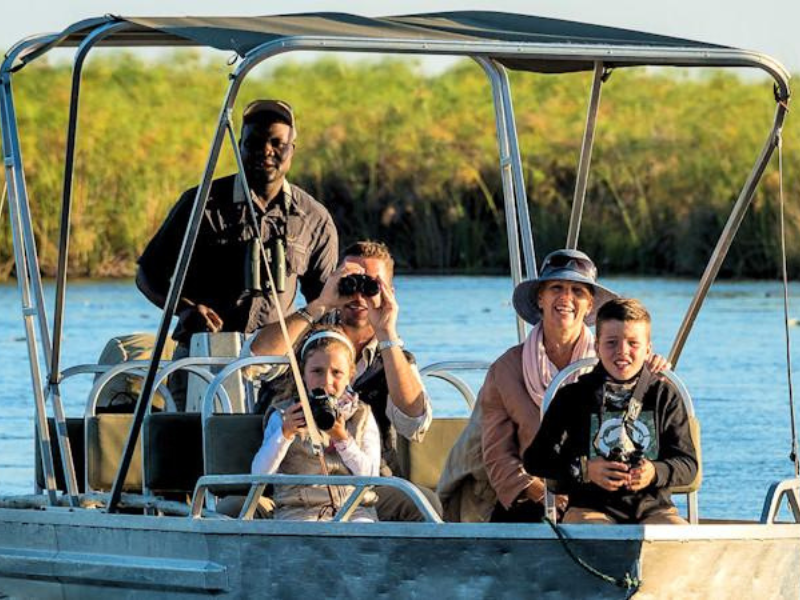
Game drive tip for this age group: give them a job. Spotting games (“count how many giraffes today,” “first one to find a lion gets to pick dinner”) keep younger children in this bracket engaged far longer than passive watching. Binoculars or a camera with their own role to play also helps.
Teenagers
Teens who might not initially be enthusiastic about a family trip tend to come back from safari as its strongest advocates. The key is giving them variety and agency. Mix walking safaris in private conservancies with night drives where predators are active. Let them choose one activity per day. Give them something with a degree of independence and challenge tracking animals on a map, helping identify species with the guide, or a more intensive conservation program.
South Africa’s Sabi Sands, Kenya’s Laikipia conservancies, and Tanzania’s private Serengeti camps are all well-suited to this age group.
When to Go: Timing a Family Safari
Aligning with the Great Migration
The Great Migration is one of the most common reasons families choose East Africa, and the timing of your trip changes what you see significantly.
January to March (Calving Season) In the southern Serengeti, wildebeest give birth to their calves. For families with younger children, this is one of the gentler windows: game drives are less rushed, newborn animals are everywhere, and lodges are quieter than peak season. The weather is warm.
June to August (River Crossings) By July and August, the herds are crossing the Grumeti and Mara Rivers, where crocodiles wait. It is intense and dramatic, the kind of thing you see in documentaries. For families with older, adventure-loving kids, this is the window to target. It also aligns with most school summer holidays in the US and UK, which makes the logistics easier.
October to December (Return South) After crossing into the Masai Mara, the herds begin moving back toward Tanzania in late October. A quieter period overall, with fewer vehicles and more intimate experiences. Good for families traveling with grandparents or younger children who do better with less crowding.
Aligning with School Holidays
The school holiday overlap works better than most parents expect. Summer holidays (June to August) land squarely in the dry season across East Africa one of the best windows for both the migration and general game viewing. Winter holidays (December to January) catch the beginning of the calving season in Tanzania and the start of the green season, with fewer tourists and lower prices.
Best Time for the Big Five
Peak Big Five viewing runs from July to October across most of East and Southern Africa. The dry season thins the vegetation, making it far easier to spot buffalo and rhino in what would otherwise be dense grass. Rivers and waterholes draw elephants and other large mammals, concentrating sightings. If seeing all five animals is a priority for your family, this is the window to plan around.
Best locations for Big Five sightings: Ngorongoro Crater (Tanzania), Madikwe and Sabi Sands (South Africa), Greater Kruger (South Africa), and Masai Mara (Kenya).
Curious to know how would you plan a family safari around the school year? Watch this video:
What to Know Before You Go
Before the Trip
Educate your kids in advance. Families consistently report that kids who arrive knowing what the Big Five are, how the migration works, or what a safari guide’s role is get more out of every game drive. It is not about studying — it is about priming their curiosity so the real thing lands harder.
Pack for the drive, not just the trip. Each child should have their own small daypack for game drives: easy snacks, a refillable water bottle, a light blanket for cool mornings, binoculars if you have them, and a camera or sketchbook if that is how they engage best. Some guides provide binoculars — ask when you book.
Layers are not optional. Early morning game drives in East Africa can be genuinely cold, even in the dry season. A fleece or warm jacket for the first hour is not overkill.
On the Drives
Morning drives are almost always the best. Animals are active, the light is good, and kids have the most energy. The midday window (roughly 11am to 3pm) is when animals rest, and so should your family — pool, nap, or explore camp on foot.
Keep drives age-appropriate. For children under 8, one to two hours is a workable maximum before attention starts to slip. For older kids, two to three hours with a break or snack stop in between works well. The guide can almost always route the drive through areas with guaranteed sightings early on, which gives younger children a reward before the novelty wears off.
Make it interactive. Spotting games are consistently the best tool for keeping kids engaged: “count how many elephants we see,” “first to spot a bird of prey,” “which animal do you think we’ll see next.” Older kids enjoy having a small responsibility — tracking the route on a map, keeping a species list, or holding the wildlife identification guide.
Safety and Health
Malaria-free destinations for younger children. If you are traveling with children under 6 or have concerns about antimalarial medications, prioritize South Africa’s malaria-free reserves (Madikwe, Pilanesberg, Addo) or Zimbabwe. Most of East Africa requires antimalarials; discuss this with your doctor well before departure.
Bring your own essentials. Most lodges have basic first aid and a medical officer on call, but bring your family’s own medications, including any that are important for your children specifically. A brief medical summary for each child is also worth having.
Listen to your guide. This sounds obvious but matters most in the field. Safari guides are trained specifically for safety around wildlife. Their instructions before and during drives are not suggestions.
Why Plan Your Family Safari with Good Earth Tours?
Almost everyone on our team is from Tanzania or Arusha. Our guides, our planners, the people who will actually be with your family in the field. Africa is not a place we read about and design trips around from afar. It is home.
For family safaris specifically, that local knowledge changes the experience. Knowing which lodges genuinely deliver on junior ranger programs versus those that just list it in their brochure. Knowing which game drive routes produce early sightings for impatient seven-year-olds. Knowing when to recommend Madikwe over Kruger for a family with a four-year-old, or why the Ngorongoro Crater is often a better first stop than the Serengeti for families with younger children.
Every itinerary we build is made from scratch, shaped around your children’s ages, your family’s energy level, and the kind of trip you want this to be. Not a template. Not a group tour with families added.
Ready to start planning? Email us at [email protected] or call +1 (888) 848-2315.
Frequently asked questions
What is the best age for a family safari in Africa? Children aged 6 to 12 tend to get the most out of a safari old enough to understand what they are seeing, young enough to be genuinely awed by it. Families with children under 6 should focus on malaria-free South African reserves where the logistics are more forgiving. Teenagers thrive with more variety and agency in the itinerary.
Which African country is best for a family safari? South Africa is the most practical starting point malaria-free options, excellent infrastructure, and a wide range of lodge types. Tanzania is best for families who want the Great Migration and Big Five in a single trip. Kenya’s Masai Mara suits families who want fast, frequent wildlife sightings. Botswana is best for older children who want a more exclusive, off-the-beaten-track experience.
What is the best time of year for a family safari? June to August aligns with school summer holidays and the dry season across East Africa, making it the most popular and practical window. December to January catches the beginning of Tanzania’s calving season with fewer crowds. July to October is the strongest window for Big Five sightings across most destinations.
Are safaris safe for children? Yes, with the right planning. Experienced guides are trained for wildlife safety, family lodges have protocols for children, and destinations like South Africa’s malaria-free reserves remove one of the main health concerns. The most important step is choosing a lodge and operator that specifically cater to families.
What should we pack for a family safari with kids? Neutral-colored, lightweight clothing and a warm layer for early mornings. Sunscreen, hats, insect repellent. Binoculars and a camera or sketchbook for each child. Easy snacks and a refillable water bottle for game drives. Any medications your family needs, plus a brief medical summary for each child.