How Much Does an African Safari Cost? A 2026 Guide
An Africa safari… We’d rather call it a life-changing experience 🦁 But it’s true that these safaris also come with a wide range of price tags. It’s important to know what to expect when budgeting for an African safari 2026.
In this guide, we break down the cost of a safari trip to Africa and help you understand what factors affect the average safari cost. So you can plan wisely and travel confidently.
Why safaris are priced the way they are
The first time most people look up safari costs, the numbers feel surprising. Before getting into the tiers, it helps to understand what you’re actually paying for.
Park fees and conservation costs. Every time you enter a national park or conservancy, you pay daily fees that fund anti-poaching efforts, ranger salaries, road maintenance inside parks, and conservation programs. In Tanzania and Kenya, these fees can run $50 to $100+ per person per day, sometimes more in premium areas. This isn’t a tourist surcharge. It’s what keeps these ecosystems functioning and the wildlife inside them alive.
Small camps and limited inventory. Safari camps aren’t hotels with 200 rooms. Most have 8 to 20 tents or suites, intentionally kept small to protect the environment and preserve the experience. Fewer rooms means limited availability, which pushes prices up, especially in high season when everyone wants the same window of time. You’re not competing for a city hotel room. You’re securing a spot in the middle of a wildlife area where capacity is deliberately restricted.
Highly trained guides. The difference between “I saw some animals” and “that was the most remarkable thing I’ve ever witnessed” almost always comes down to the guide. These are people who have trained for years to read animal behavior, tracks, alarm calls, and movement patterns. Within the first hour, most travelers realize how much they would have missed on their own.
Bush flight logistics. Getting to remote camps isn’t a taxi ride. In places like Botswana, you’re often flying into small airstrips on bush planes after one or more connections, reaching areas where roads barely exist. Fuel, supplies, and basic infrastructure are harder and more expensive to move into these areas. That complexity is priced in.
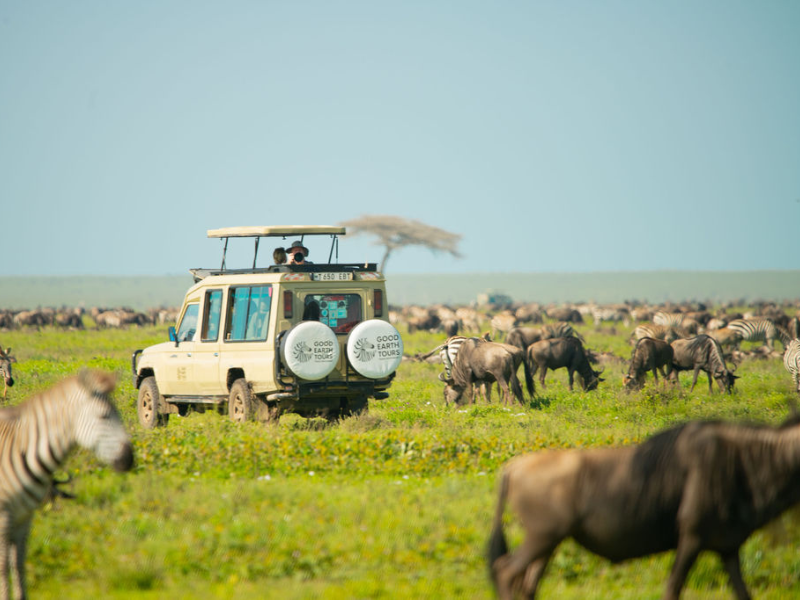
Vehicles built for the bush. Safari vehicles are purpose-built, with open sides, raised roofs for standing views, camera mounts, gear storage, and designs built around game viewing rather than just transport. High-end safaris are also fully customizable: if a sighting is unfolding somewhere, you stop. If plans need to change, they do. That flexibility is part of what you’re paying for.
What Does an African Safari Cost?
The short answer: It depends.
The average cost for an African safari ranges between $250 to $8,000+ per person per night. The exact price is subject to many different factors. Let’s see a few categories.
Budget safaris. These safaris start at $250 per day. You can expect group tours and shared accommodations. The facilities on these tours will generally be basic.
Mid-range safaris. Priced between $1000 and $4000 per person per day. These packages offer more comfortable lodges and private guides. The experience will be more personalized.
Luxury safaris. Ranging from $4000 to $5000+ per person per day. Luxury safaris provide top-tier accommodations and exclusive experiences. The service is also excellent!
Cost of Safari: East Africa
Tanzania Safari Cost
We offer the following in Tanzania:
Tanzania Safari, 10 days, $9000 per person. This premier package covers iconic destinations. Like the Serengeti and Ngorongoro Crater.
Tanzania Safari: Big 5 & Beyond, 7 days, $4150 per person. Experience the Big 5 (lion, leopard, rhinoceros, elephant, and African buffalo).
First Class Tanzania Safari, 10 days, $14,100 per person. If you’re looking for unparalleled luxury, this you’ve found it!
Kenya Safari Cost
For Kenya, our packages include:
Classic Kenya Safari, 8 days, $3925 per person. You’ll see Lake Nakuru, Masai Mara, and Samburu.
Exclusive Kenya Safari, 8 days, $7450 per person. You will be enjoying Kenya’s premier wildlife destinations with this luxury package.
Gorilla Trekking Cost
For those interested in primate encounters:
Uganda Gorilla & Chimpanzee Safari, 6 days, $3965 per person. In this safari, you discover gorillas and chimpanzees in the lush African forests
Gorilla Trek (Rwanda), 4 days, $5670 per person. Majestic mountain gorillas is what you’ll be seeing on this safari!
Cost of Safari: Southern Africa
South Africa Safari Cost
Our packages for South Africa include:
South Africa Safari, 13 days, $8470 per person. This covers Cape Town, the Garden Route, and premier game reserves.
Explore South Africa, 8 days, $3650 per person. With this tour, you go through all of South Africa’s highlights.
So, how much is a safari in South Africa? Generally less than in East Africa, thanks to good infrastructure and self-drive options.
Botswana Safari Cost
Our Botswana offerings include…
Classic Botswana Safari, 9 days, $4440 per person. This includes the Okavango Delta and Chobe National Park. You’ll also see the Victoria Falls.
Botswana Desert & Delta Safari, 11 days, $7290 per person. Explore the landscapes of Botswana’s deserts and wetlands. In addition to the destinations in the Classic Botswana safari—expect to see the Makgadikgadi Pans National Park and Moremi Game Reserve.
Botswana is more exclusive and remote. Camps are fly-in only, so the safari cost will generally be higher. But the plus point is, you’ll experience unmatched wildlife + fewer crowds 😄
Is an African safari worth it?
Once the numbers are on the table, most people ask some version of this question. A few things worth thinking about:
The wildlife is not staged. You’re watching real moments unfold in real time, often as the only vehicle around. That’s a category of experience that doesn’t exist in most travel.
Your spending has a direct conservation impact. Park fees and lodge revenue fund wildlife protection and support local communities. The economics of responsible tourism are what make these ecosystems viable. Your trip is part of that.
The value calculation is different from a resort trip. A safari typically includes accommodation, all meals, guided game drives, park fees, and transfers in one price. When you itemize what’s included, the per-experience cost often looks more reasonable than the headline number suggests.
These trips stay with you. Years later, most safari travelers can describe specific moments from their trip in detail. That’s a different kind of return on a travel investment.
How to know if safari fits your budget
Start with your total number, not the destination. Decide what you’re comfortable spending, then work backwards to find what’s possible within that range. There’s more flexibility than most people expect.
If the budget is tight, there are real levers to pull: traveling in shoulder season, mixing one standout camp with simpler nights, or choosing a destination with stronger budget options like South Africa. Pick the one or two things that matter most (wildlife access, fewer crowds, a specific experience) and let the rest flex around those.
What Influences Average African Safari Cost?
The cost of a safari in Africa can vary dramatically, even within the same region. To understand the price differences, it’s important to look at the main factors that affect what you’ll pay…
Season
Africa’s safari regions operate on seasonal pricing. This means the time of year you choose to go really affects your experience + your wallet.
- High Season (June to October): This is when game viewing is at its best. Dry weather draws animals to water sources, so sightings are more predictable. Because demand is high, so are prices. Expect to pay a premium for lodges and flights.
- Low Season (March to May): Also known as the “green season”. This period is lush and ideal for birdwatching. It’s also the most affordable time to go on safari; many camps will offer discounts of up to 40%.
- Shoulder Season (November to February): These transitional months can offer great value. The weather may be less predictable, but the wildlife is still abundant. And prices are more moderate.
Trip Length
The length of your safari directly affects your total cost, but it also affects your per-day value.
A shorter safari, 3 to 5 days, might have higher per-day costs. This is because of transfers.
A longer safari, 7 to 14 days, spreads out fixed costs like international flights and typically gives you more value, variety in locations, and better chances to see wildlife.
Keep in mind that some national parks or regions require longer travel times. A 10-day safari may be better suited for areas like Tanzania or Botswana.
| 5-day safari | 7-day safari | 14-day safari | |
| Value tier ($300/day) | ~$1,500 | ~$2,100 | ~$4,200 |
| Premier tier ($700/day) | ~$3,500 | ~$4,900 | ~$9,800 |
| Luxury tier ($1,500/day | ~$7,500 | ~$10,500 | ~$21,000 |
| Fixed costs (flights, visa, insurance) | ~$1,500 to $4,000 | ~$1,500 to $4,000 | ~$1,500 to $4,000 |
Level of Accommodation
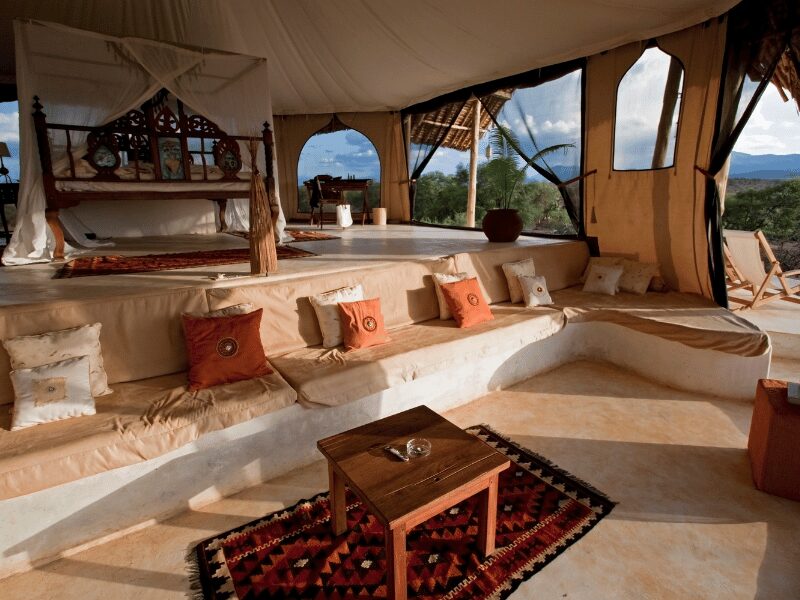
Where you stay plays one of the most significant roles in determining how much your safari will cost. Here’s an idea of what to expect:
Value ($250 to $500 per person per day)
These are budget-friendly options. They will typically include basic safari lodges or permanent tented camps. Value accommodation is ideal for group tours or first-time travelers looking for an affordable adventure. Amenities are clean and comfortable, but not overly luxurious.
Premier ($600 to $1000 per person per day)
Premier accommodation offers a balance between comfort and cost. It often includes mid-range boutique lodges or well-rated tented camps. You’ll enjoy private bathrooms, quality meals, excellent guiding, and small group or private tours.
Luxury ($1200 to $2500+ per person per day)
These safaris are all about exclusivity and indulgence. Think private plunge pools, gourmet dining, fly-in access, and highly personalized service. Luxury accommodations are typically set in prime wildlife areas with little guest capacity.
Check out our blog: What are Safari Accommodations Really Like
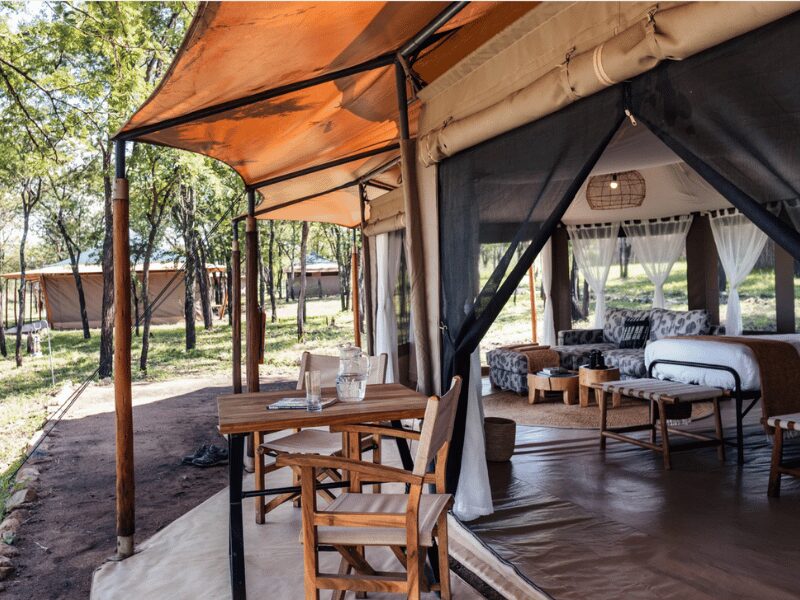
What’s Not Included: Cost of a Safari
Our packages are comprehensive, but there are a few hidden costs that are not covered. So you should account for these as you prepare for your safari.
International Flights
The costs vary widely by origin. If you’re flying from the USA, expect to pay $1,100 to $3,500 for a round-trip to East Africa. For folks flying into Southern Africa from Europe, a cost estimate of $1,000 to $3,200 should be kept in mind.
Visas & Vaccinations
For visas, you will be paying an additional $50 to $100, depending on the country. Vaccinations, for yellow fever (required in some countries), typhoid, and malaria may add $100 to $300 to your total.
Travel Insurance
Strongly recommended. Coverage typically costs $200 to $3,300+, depending on trip length and destination.
Staff Tips
Tipping is customary and part of the cost of a safari trip to Africa. We recommend that guests tip the guide $30 to $40 per day (Total). For the camp staff, a tip of $5 to $10 per day is suitable. (These tips are recommended per guest).
How to save on your safari
Travel during shoulder season. This is the single most effective lever for reducing cost without significantly reducing the experience. Parks are still full of wildlife, lodges offer discounts, and flights are cheaper.
For East Africa (Kenya and Tanzania), the most accessible shoulder windows are:
- January to March (before the long rains, and also calving season in the Serengeti)
- June (just before the Great Migration hits full swing)
- October to early December (after the migration peak, before the holiday season)
For Southern Africa (South Africa, Botswana, Namibia, Zimbabwe, Zambia):
- April to May (after the rainy season)
- September to early November (before the rains return)
Consider lesser-known parks. Big-name parks come with higher entry fees and busier camps. Parks like Tarangire in Tanzania or Samburu in Kenya offer excellent wildlife and a more intimate experience at lower overall cost.
Look at group safaris. Shared vehicles and split guide fees meaningfully lower the daily rate. They’re also a good option for solo travelers or those open to meeting other people on the road.
Summing Up African Safari Cost…
There’s no one-size-fits-all answer when it comes to African safari cost, and that’s a good thing. Whether you’re planning an adventurous group trip on a budget, a romantic mid-range honeymoon, or the luxury wildlife experience of your dreams, there’s a safari out there that fits your goals, preferences, and price point.
The key is understanding the moving parts: the season you travel in, the countries you explore, your accommodations, and how long you stay. By getting clear on what affects safari prices—from green season discounts to luxury lodge upgrades—you’ll be better equipped to plan a trip that balances both adventure and value.
Remember, an African safari isn’t just a vacation—it’s a bucket-list journey that connects you with nature, culture, and unforgettable wildlife. It’s worth every penny—and with the right guidance, you can make every dollar stretch further.
If you’re ready to start planning or still figuring out what fits your budget, our team is here to help. We specialize in creating custom itineraries that match your style and spending plan—so you don’t have to guess your way through it.
Have questions about planning a safari in 2026?
Contact our team to talk to one of our expert safari planners and let’s bring your dream trip to life—without surprises when it comes to cost.
Frequently Asked Questions
How much does an African safari cost per day?
The range is wide: $250 to $8,000+ per person per day depending on destination, season, accommodation tier, and whether you are on a group or private itinerary. Most independent travelers on a first safari fall in the $400 to $900 per person per day range (premier tier, private or semi-private). Budget group safaris start around $250 per day. Ultra-luxury private camps at the top end run $2,500 or more per person per day.
What is the average cost of an African safari?
For a mid-range safari in East Africa, the most common range is $500 to $900 per person per day during peak season and $350 to $600 during shoulder or green season. Over a 10-day trip, a premier-tier safari in Tanzania typically runs $6,000 to $12,000 per person, excluding international flights. Good Earth Tours’ Tanzania packages start at $4,150 per person for 7 days.
What is the cheapest time to go on safari?
The green season — March to May in East Africa, April to May in Southern Africa — offers the deepest discounts, often 30 to 40 percent below peak rates. This is also when some of the most memorable experiences happen: calving season in the Serengeti, lush landscapes, fewer vehicles, and the chance to book luxury camps at mid-range prices. The trade-off is some afternoon rain and occasionally harder conditions for wildlife spotting in dense vegetation.
What is not included in a safari package?
International flights, domestic flights between parks, visas, vaccinations, travel insurance, and tips for guides and camp staff are almost always additional. For a 10-day safari, these extras typically add $2,000 to $5,000 per person on top of the package price.
Is a 5-day safari long enough?
Yes, especially in a high-density park like the Masai Mara or Ngorongoro Crater, where wildlife sightings happen quickly. The limitation is that transfer time eats a larger proportion of total trip days. Most operators recommend 7 to 10 days for a first safari to give you time in multiple areas without feeling rushed. Fourteen days is the sweet spot if you want to combine two regions or add a beach extension.
How much does a Tanzania safari cost?
Tanzania safaris run $250 to $1,500+ per person per day. Budget group safaris start around $250 to $350 per day. Most independent travelers spend $400 to $700 per day on a premier-tier private safari. Peak season (June to October and December) pushes rates to the higher end; green season (March to May, November) can cut those rates by 30 to 40 percent. Good Earth Tours’ Tanzania packages range from $4,150 (7 days) to $14,100 (10 days, luxury) per person.