Tipping on Safari: What You Need to Know
Planning an African safari comes with plenty of excitement. Spotting your first elephant, watching the sun dip behind the savanna, settling into a cozy lodge after a long game drive. But there’s one practical question almost every traveler asks: how much do you tip on a safari? Tipping on safari works a little differently than tipping at restaurants back home, and knowing what’s normal can make your trip feel smoother and more confident from the start.
This guide breaks down everything you need to know about tipping on safari! So, let’s get started.
Our Recommended Tipping Guidelines (Per Group, Per Day)
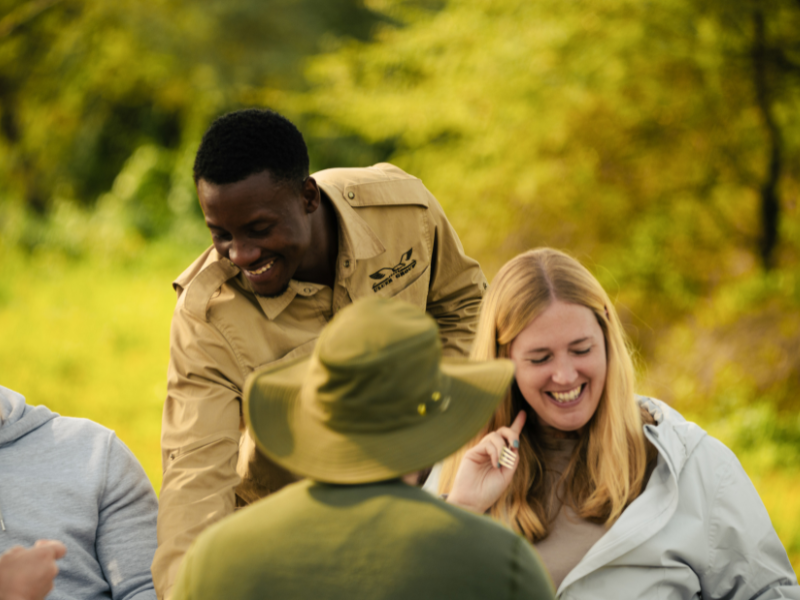
Tipping is a customary way to show appreciation for those who enhance your safari experience, including staff and guides. While not mandatory, it is greatly appreciated if you are satisfied with the service. Here are our recommended guidelines, per group per day:
- Safari guide: $30 to $45 per day, typically given at the end of the safari
- Hotels and lodges: around $5 per day to the communal tip box, usually found at the reception or front desk, to support the entire staff
- Transfer drivers: $10 to $20 for their services
The rest of this guide explains why tipping matters, how it works in practice, and how much cash to bring.
Why Tipping Matters
How Gratuities Support Guides and Lodge Staff
Tipping plays an important role in the safari world because your guides, drivers, and lodge teams are the heart of your experience. Guides spend long days tracking wildlife, sharing their knowledge, keeping you safe, and making each moment in the bush memorable. Lodge staff (housekeepers, waiters, porters, and chefs) work behind the scenes to make your stay feel warm and welcoming.
Gratuities help supplement their income and acknowledge the effort that goes into creating an unforgettable safari. A thoughtful tip shows appreciation for their expertise, hospitality, and the care they put into every detail of your trip.
Why Amounts Vary by Country
Tipping standards shift across Africa because each country has its own economy, cost of living, and tourism culture. A guideline that’s common in Tanzania may feel different in Kenya or South Africa simply because wages, park fees, and lodge operations vary from place to place.
Some regions have long established safari tipping practices, while others follow newer or more flexible norms. That’s why it helps to understand country specific expectations, so your tips feel fair and are aligned with local standards.
How Much to Tip on an African Safari
Simple Daily Ranges for Guides and Drivers
A good rule of thumb for how much to tip on a safari is to think in daily ranges rather than fixed amounts. We recommend $30 to $45 per group per day for your safari guide, typically given at the end of the safari. For transfer drivers, a tip of $10 to $20 for their services is recommended.
These ranges help you stay prepared without guessing, and they offer enough flexibility to tip a little more if your guide goes above and beyond (which often happens on safari).
What’s Normal for Lodge Staff
Lodge teams work together to make your stay run smoothly. So tips are usually pooled and shared. We suggest contributing around $5 per group per day to the communal tip box, usually found at the reception or front desk, to support the entire staff. This includes housekeeping, servers, kitchen staff, and the people behind the scenes who keep everything comfortable.
Some high end lodges may give recommended ranges slightly above this, but the pooled system keeps things simple for travelers while ensuring the entire team is appreciated.
Tipping in Tanzania, Kenya and South Africa
Quick Country by Country Expectations
Tipping expectations across East and Southern Africa follow the same general structure. Our recommended guidelines above are the best place to start, and here is what else is worth knowing in each country:
Tanzania:
Use our recommended guidelines: $30 to $45 per group per day for your guide, around $5 per day to the communal tip box at your lodge, and $10 to $20 for transfer drivers. Tanzania’s safari culture places strong value on guide expertise, so it’s common to lean toward the higher end if service feels exceptional.
Read more here on How Much Tanzania Safaris Cost.
Kenya:
Kenya follows the same general structure, and our recommended guide, lodge, and transfer driver amounts above are a good place to start. In Kenya, safari guides often spend longer hours with guests, so consistent daily tipping is appreciated.
South Africa:
South Africa has a wider range because experiences vary, from traditional bush lodges to luxury private reserves. Your planner can tell you what is typical for the specific lodges on your itinerary. Restaurants and city hotels also follow standard South African tipping culture (around 10 to 15%), which many travelers follow before or after their safari.
When to Use the Tip Box vs Tipping Individuals
Most safari lodges provide a central tip box, usually found at the reception or front desk, into which you add your tip. This keeps things simple and ensures every staff member (front facing or behind the scenes) shares the gratuity. Use the tip box for general lodge staff unless you’re told otherwise.
For guides and drivers, tipping individually is the norm. They spend one on one time with you, tailor your experience, and often become the highlight of your trip. So, handing them their gratuity directly is both customary and appreciated.
If you’re ever unsure, lodges happily explain their tipping system. The goal is the same everywhere: to show genuine appreciation in a way that feels respectful and easy.
Practical Tips
Cash, Currency, and Timing
Bringing the right cash makes tipping on safari much easier. US dollars are widely accepted across Tanzania, Kenya, and South Africa, especially for tips. Just make sure your bills are clean, undamaged, and printed after 2009; older notes may not be accepted in some East African countries.
Tip your guide on your last day together, either at the lodge or before you head off for your next stop. Tip transfer drivers when they drop you off. For lodge staff, you can leave your gratuity in the tip box at checkout, which ensures the entire team shares in it. If you’re moving between several lodges, plan to set aside an envelope for each stay so you’re not scrambling at the end.
How Much to Bring So You’re Prepared
A little advance planning helps you stay organized. Most travelers set aside about $35 to $50 per group per day (your guide plus the lodge tip box), plus $10 to $20 for each transfer driver, to comfortably cover guides, drivers, and lodge staff across their trip. If your safari includes multiple locations, add a small buffer (maybe an extra $50 to $100) in case you encounter exceptional service or unexpected situations.
You don’t need to bring all your cash from home; ATMs are available in major cities like Arusha, Nairobi, and Johannesburg. Still, having a ready supply of small USD bills makes tipping smooth and stress free from your very first game drive. For more on getting ready, see our how to prepare for safari guide and our Tanzania safari packing list. Tipping is also one of the extras to budget for, as we explain in how much an African safari costs.
Conclusion
Frequently Asked Questions About Tipping on Safari
Is tipping mandatory on safari?
No. Tipping is a customary way to show appreciation for your guide and the lodge staff, and while it is not mandatory, it is greatly appreciated if you are satisfied with the service.
How much should I tip my safari guide?
We recommend $30 to $45 per group per day, typically given at the end of the safari.
How much should I tip lodge staff?
We suggest around $5 to $10 per group per day to the communal tip box, usually found at the reception or front desk, which supports the entire staff.
How much should I tip a transfer driver?
A tip of $10 to $20 for their services is recommended.
Are the recommended amounts per person or per group?
Our recommended amounts are per group per day, so you can split them between everyone traveling together.
Conclusion
Tipping on safari doesn’t have to feel confusing or awkward. With a little preparation and a sense of what’s customary in each country, you’ll feel confident showing appreciation to the people who make your journey special. Your guides, drivers, and lodge teams work hard, often from sunrise to sunset, to create a meaningful experience, and your gratuities genuinely support their livelihoods.
By keeping simple daily ranges in mind, carrying the right currency, and understanding when to tip individually versus using the lodge tip box, you’re already set up for a smoother adventure.
And if you’re traveling with Good Earth Tours, you’ll always have clear guidance from our team so you never feel unsure. Have a question about tipping on your trip? Contact our team. With the logistics out of the way, you can focus on what really matters: soaking in Africa’s landscapes, wildlife, and unforgettable moments 🤍