Ngorongoro Crater Tanzania: Facts, History, and What to Expect
Ngorongoro Crater, Tanzania, is one of those places that feels almost unreal until you’re standing on its rim. A vast volcanic caldera, with steep walls dropping into a wildlife-filled floor, and animals everywhere, often within minutes of your first game drive.
Located in northern Tanzania, the crater is a natural enclosure where predators and prey coexist in unusually close quarters, a unique geographic arrangement that makes wildlife viewing incredibly dense and consistent.
But there’s more to Ngorongoro than great sightings. Its history stretches back millions of years, shaped by volcanic activity, early human settlements, and long-standing Maasai traditions. Today, it’s a protected area where culture and tourism intersect in a very deliberate way.
What is the Ngorongoro Crater?
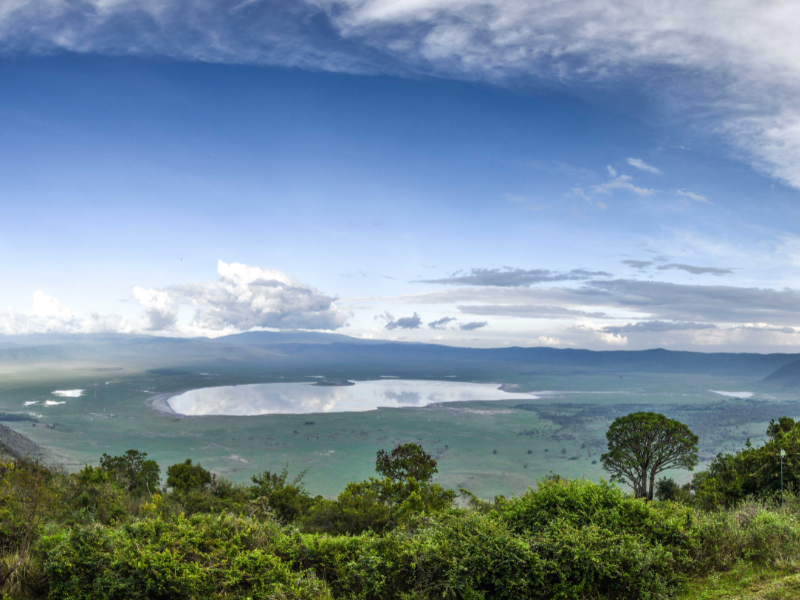
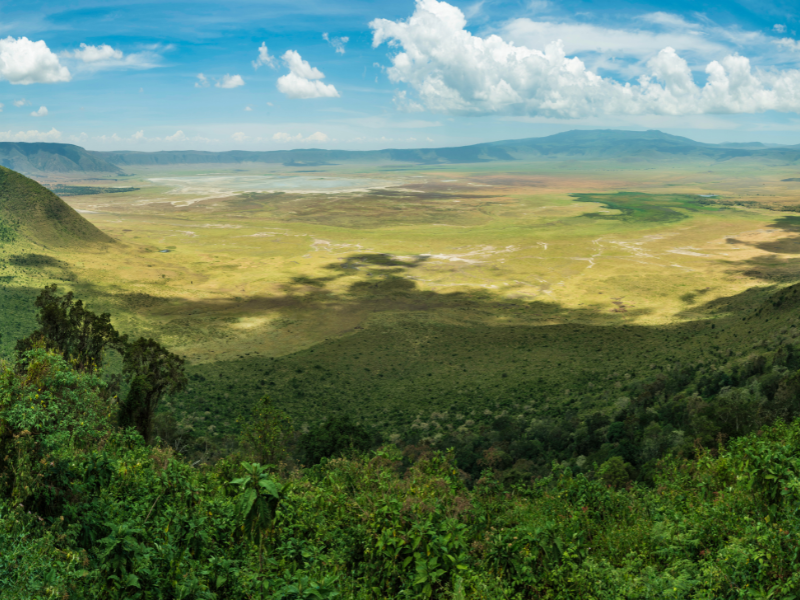
Ngorongoro Crater is the world’s largest intact volcanic caldera. It was formed over two million years ago when a massive volcano collapsed inward after an eruption. What remains today is a vast, bowl-shaped landscape with steep walls + a remarkably fertile floor.
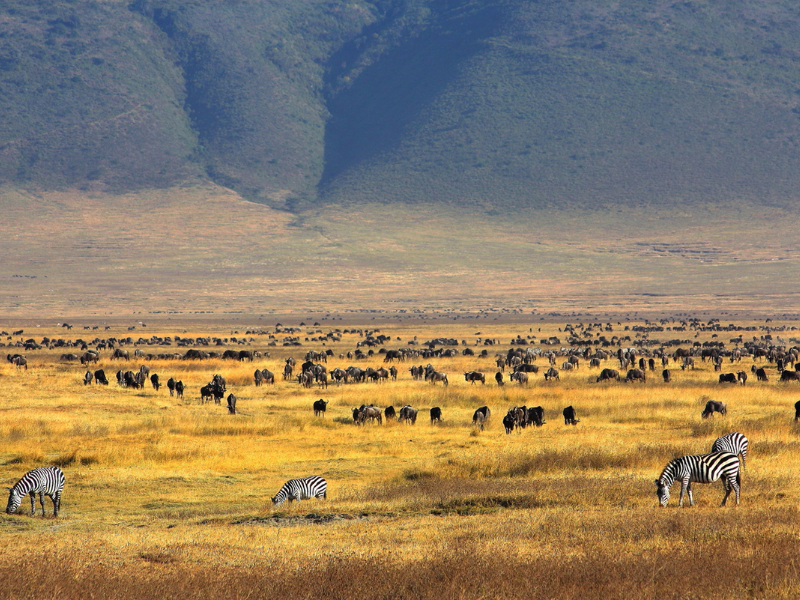
The crater spans about 260 square kilometres and acts like a natural wildlife enclosure. Animals live here year-round, as water and grazing are consistently available (the primary reason why game-viewing feels much more concentrated compared to other safari destinations).
One of the most exciting facts about the Ngorongoro Crater is that it is a mix of grasslands, wetlands, forests, and soda lakes, all within a single ecosystem! Plus, it enjoys cooler temperatures and a distinct climate due to its elevation above the surrounding plains.
Where is Ngorongoro Crater Located?
Ngorongoro Crater is located in northern Tanzania, within the larger Ngorongoro Conservation Area. It sits between the Serengeti National Park and Lake Manyara, and is considered a key stop on the popular northern safari circuit.
The crater lies about 180 kilometres west of Arusha, Tanzania’s central safari hub. Most travellers reach Ngorongoro by road as part of a multi-day safari, often combining it with the Serengeti, Tarangire, or Lake Manyara.
Thanks to the elevation of the Ngorongoro Crater, Tanzania, the destination is both easy to access and strategically placed, one of the reasons it fits so seamlessly into Tanzania Ngorongoro safari itineraries.
Fascinating Facts About the Ngorongoro Crater
The rich history of Ngorongoro makes it more than just a safari destination. You’ll explore something new at every step…
- Elevation of Ngorongoro Crater & highlands. One of the most intriguing facts about the crater, which also happens to be the reason behind its misty mornings and cooler air.
- Ngorongoro Crater altitude (rim). The rim rises to around 2,200 to 2,400 meters, which is why even midday can feel refreshingly cool, especially after an early morning descent.
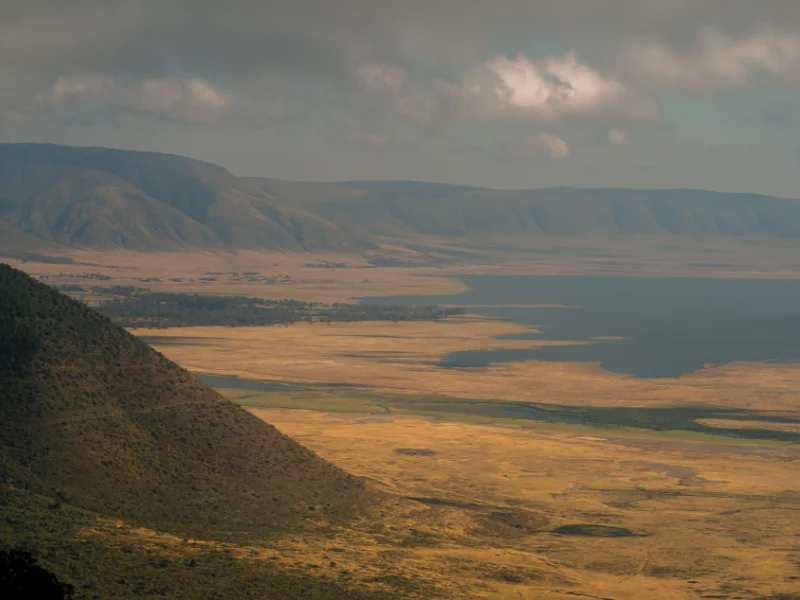
- Crater depth and diameter. The crater floor sits nearly 600 metres below the rim and stretches close to 20 kilometres across!
- Wildlife density and the Big Five. Very few places in Africa offer such concentrated wildlife viewing. The Big Five live here year-round, often spotted within a single game drive. Cool, isn’t it?
- Unique microclimates, so you experience it all in different parts, like cool and misty along the rim, warmer and drier on the floor, as well as forests, wetlands, grasslands, and soda lakes, altogether.
- Maasai communities around the crater. Ngorongoro is not an untouched wilderness. Maasai families have lived alongside this landscape for generations, so expect rich cultural depth when visiting.
- UNESCO World Heritage Site status. A designation earned for preserving not just wildlife, but an entire living landscape shaped by nature and people alike.
These are just a couple of the most exciting facts about the Ngoronoto Crater. Words can never truly do justice to the scale and beauty of the crater itself.
Best Time to Visit the Ngorongoro Crater
Ngorongoro can be visited year-round, but the experience changes with the seasons, so you need to check whether or not the time period you’re planning around meets your checklist.
The dry season (June-October) is the best time to visit. Peak season, excellent wildlife visibility, and more comfortable temperatures. However, crowds are denser, and prices are higher, so you’ll have to choose your priorities.
The green season (November-May) transforms the crater into a lush, dramatic landscape. Calving season, usually between January and February, adds another layer of interest as predators closely follow newborn herds. Crowds are also fewer, birdlife is at its best, and prices are affordable, too.
Rainfall peaks around March to May, when roads can be muddy and visibility slightly reduced. That said, the crater’s wildlife remains present year-round, so sightings are still rewarding for travellers who don’t mind a little unpredictability.
Takeaway? The best time to visit the Ngorongoro Crater varies from traveler to traveler. Make a quick checklist to decide which season delivers the best of Ngorongoro safaris to you.
Accommodation Around the Crater
Where you stay around Ngorongoro Crater, Tanzania, has a big impact on your overall experience. Here’s how the main options compare.
Staying on the Crater Rim
Rim lodges offer some of the most dramatic views in Tanzania. Expect sweeping overlooks into the crater, cooler temperatures, and misty mornings. The biggest advantage is proximity; you’re right at the descent point, which means early access to the crater floor. These lodges tend to be upscale, with a focus on comfort, views, and atmosphere.
Staying in Nearby Karatu
Karatu sits just outside the conservation area and is a popular base for travelers seeking greater flexibility. Accommodations here are generally more budget-friendly, while still offering good comfort. It’s also well positioned for combining Ngorongoro with Lake Manyara or Tarangire. The trade-off is a longer drive to the crater in the morning, but many travelers find the value worth it.
What to Expect from Crater-Style Lodges
Lodges around Ngorongoro are designed to match the environment. Architecture leans natural and understated… stone walls, wood accents, and large windows that frame the crater.
The weather in Ngorongoro Crater, Tanzania, cools dramatically in the evenings, so lodges are usually equipped with fireplaces, warm lighting, and cozy communal spaces. And because days start early here, morning wake-up calls are common (fun fact- breakfast is excellent; warm drinks, fresh bread, and enough fuel for a whole game drive!).
Evenings are quiet by design. There’s no nightlife, and that’s intentional. After sunset, the focus shifts to rest + reflection. Overall, it’s all about giving your body clock a complete reset.
Planning a Ngorongoro Safari
Ngorongoro Crater is compact, but incredibly rich. Because of that, one full day inside the crater is usually enough to see a wide range of wildlife. Most game drives last around five to six hours, starting early in the morning when activity is highest.
That said, Ngorongoro works best as part of a larger northern Tanzania itinerary, not as a standalone stop.
A popular and well-balanced route is to combine Ngorongoro with Serengeti National Park. Ngorongoro delivers dense, reliable sightings, while the Serengeti adds longer game drives and seasonal migration action. Together, they offer contrast & depth. If you are wondering what else you can pair with in the Ngorongoro crater read our Favorite Tanzania Safaris blog.
If you’re working with fewer days, pairing Ngorongoro with Lake Manyara National Park or Tarangire National Park is a great option. Lake Manyara adds lush forests and birdlife. Tarangire brings big elephant herds and baobab-dotted landscapes, especially during the dry season.
In practical terms:
- 1 day in Ngorongoro Crater, Tanzania, is ideal
- 2 to 3 additional days work well for the Serengeti
- 1 extra day suits Lake Manyara or Tarangire nicely
The key is thoughtful planning. With operators like Good Earth Tours, itineraries are structured to keep travel smooth and game time meaningful.