How to Choose the Best Private Safari Company (and What They Should Be Doing Behind the Scenes)
Searching for the best private safari company can feel overwhelming. Do you even need to work with a team, or can you manage it all on your own? And if you do, should you book through a travel agent, a travel agency, an individual guide, or a tour operator? Even more confusing is which safari tour operator to work with, if you do decide to take that route.
In this guide, we compare your four main booking routes, explain what a great private safari company does behind the scenes, and share the questions to ask before you pay a deposit. Don’t worry, the decision isn’t too complicated. Just knowing exactly what your planner should be doing behind the scenes (+ how to tell if they are) will make your choice much easier. So, let’s get into it before you start planning.
What Is a Private Safari Company?
A private safari simply means the trip is built around you and your group, not around a fixed departure date or a shared tour. In practice, that usually looks like this:
- Your own vehicle and guide, so you set the pace and are not sharing the game drive with strangers
- An itinerary designed around your dates, interests, budget, and comfort level
- Flexibility to stay longer at a great sighting or change plans when conditions change
The best private safari company is the one that delivers all of that reliably, and that comes down to who is actually planning and running your trip. Which brings us to the first big decision.
Four Ways to Book a Safari (And How They Compare)
Before you compare companies, it helps to know which type of provider you are dealing with. Most safari bookings fall into one of four routes, and each one works differently once you have paid your deposit.
| Booking route | How it works | Good for | Watch out for |
| Travel agent with an operator relationship | Books your trip through an operator they trust, then passes your questions along | Travelers who like a familiar contact close to home | An extra layer between you and the team running your trip |
| Travel agency | Sells trips from many suppliers, often bundling flights, hotels, and tours | Convenience and one stop shopping | Safaris built from set packages, delivered by someone else |
| Individual guide | One person hosts and guides their own tours, often a one man show | Travelers focused on price who are comfortable with some risk | No backup if your guide is unavailable, sick, or out on safari with other guests |
| Tour operator | Designs, books, and runs the trip on the ground with its own team | Travelers who want a tailored trip and a team behind it | Usually costs more than hiring an individual guide |
Booking Through a Travel Agent With an Operator Relationship
A good travel agent who works closely with a trusted operator can be a solid choice. They handle the booking and you get a familiar point of contact. The trade off is distance. Your questions pass through the agent before they reach the people running the trip, and the agent may not know what is happening on the ground right now.
Booking Through a Travel Agency
A travel agency sells trips from many suppliers and can bundle flights, hotels, and tours in one booking. That convenience is real, but safaris sold this way are often built from set packages and delivered by a third party, which leaves less room to tailor your route or adjust once you are there.
Booking With an Individual Guide
An individual guide who hosts their own tours, like a one man show, can be a great fit for some travelers, and the price is often lower. It also comes with its own risks. If your guide is out on safari with other guests, they can be hard to reach when you have a question. And if they get sick or have an issue on your safari dates, there may be no one to step in, which means your trip may not go ahead. This is where many safari horror stories begin. So yes, it may be cheaper, but it is worth weighing carefully.
Booking With a Tour Operator
A tour operator designs and runs your safari itself, with its own team, guides, vehicles, and relationships with camps and lodges. It usually costs more than hiring an individual guide, but you have a whole team behind your trip instead of one person. That is the route the rest of this article focuses on.
Where Good Earth Tours Fits In
We are both a travel agency and a tour operator. For travelers in the USA and Canada, we work as your travel agency. In Tanzania, and in each country where we run safaris, we are the tour operator on the ground. That means the same team that plans your trip also runs it, with people to reach in North America and in Arusha. You can see how it works in our custom safari booking process.
Hand Holding From Your First Question to Your Last Game Drive
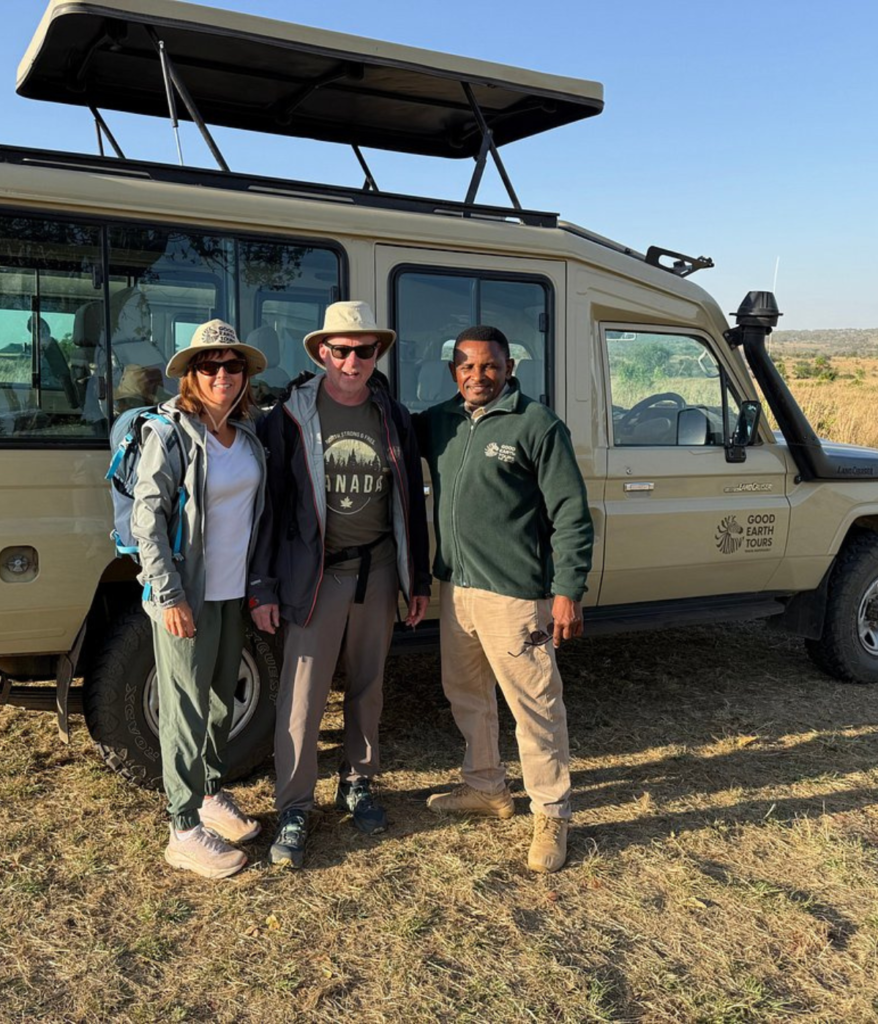
One of the biggest benefits of booking with us is that we stay with you from beginning to end. If a question pops up after you book and before your trip, we are easy to reach and happy to help. We also provide videos and guides to walk you through the details that trip up first time travelers, including:
- Buying your visa, step by step
- Travel insurance tips
- What to pack, with our Tanzania safari packing list
- How to get ready before you fly, in our how to prepare for safari guide
You can browse more in our travel e-resources.
If you are planning your first safari and do not know where to start, our free planning guide walks you through it.Get the Free Safari Planning Guide
The Difference Between a Safari Tour Operator and a Booking Platform
A safari tour operator and a booking platform may overlap in some areas. Both can get you a safari, but that’s where the similarity ends. What a safari operator does is very different from what a booking platform does.
A booking platform simply lists what’s already available and lets you pick from it, whereas a safari operator builds your entire experience from the ground up. It works like a full time planner, thinking through your trip from start to finish and paying attention to details like…
- Which park makes sense first
- How long should you stay
- What route avoids backtracking
- Where wildlife sightings are strongest during your travel dates
Now compare that to a booking platform, which is more like a marketplace, where you browse lodges, compare prices and then book. Once the confirmation email lands, the responsibility shifts to you.
- Need help adjusting your route?
- Want to understand migration timing?
- Trying to figure out internal flights or park logistics?
That’s all on you. A booking platform only gives you options, nothing more than that.
What Happens Before Your Itinerary Reaches Your Inbox
The polished itinerary that you received wasn’t the work of an hour. It took multiple decisions from an expert safari tour operator.
First, the experience is mapped around your reality. That dream list of destinations gets filtered through travel time, park access, and seasonality. What looks close on a map can take hours to reach. A strong plan avoids exhausting transfers and builds a smooth, logical flow from one stop to the next.
Then, they match locations to wildlife movement. Migration patterns, water levels, and recent sightings all influence where you should stay in the park right now.
Time for camp selection, beyond aesthetics. Yes, the views matter. But so does placement. Is it inside the park or outside? Does it allow off road driving? Night drives? How far is it from key wildlife zones? All the little details that make a typical day on safari feel the way it does.
After that, logistics get locked in. Flights, transfers, park fees, timing between activities and even buffer time for delays to make sure nothing feels uncertain or rushed.
Finally, it’s all refined around you, focusing on your pace, interests, and comfort level.
The itinerary in your mail will…
- Flow naturally from one location to the next
- Balance wildlife, travel time, and rest
- Include clear reasoning behind each choice
- Feel truly tailored
You see the behind the scenes work showing through?
How a Good Operator Vets Lodges and Camps (It’s Not Just Star Ratings)
It’s easy to assume that higher rated lodges always mean a better safari, but the truth is, location matters far more than the ratings alone.
Two camps can look equally beautiful online and might even sit in the same region. However, it’s possible that one can be set deep in the wildlife areas, while the other will require a one hour drive (and that extra time definitely makes a huge difference, so it shouldn’t be ignored, ever!).
You’d also want to consider the access rules. Not all camps allow off roading, so your experience will have to be adjusted accordingly. If getting up close is important to you, a good operator will factor that in early and place you in areas where it’s actually possible.
Working with experienced teams, including many Arusha safari tour operators, means you’ll get firsthand knowledge about the best guides, vehicles, and lodges, which wouldn’t be possible if you’re doing it all yourself.
The Logistics No One Talks About: Transfers, Timing, and Backup Plans
Safari planning often doesn’t talk about the important things that hold the experience together. Transfers, for example, are an imperative part of the trip, but they’re actually more than just getting from point A to B. Some routes involve bush flights; others mean long drives on uneven roads. Meaning? Plans that look simple on paper can get super exhausting. Professionals will always consider that to create a smooth itinerary.
Timing, too, plays a subtle but essential role. Schedules are timed around wildlife, and you’re expected to follow the timings very strictly. Too late, and you miss a game drive. Too early to leave, and you cut another one short. It is better to let an expert operator handle that stress for you, because even if you manage to be ready on time for the game drives, real world variables (like delayed flights, unpredictable roads, etc.) still might mess things up.
Finally, there’s the part no one plans for… when things shift. Weather surprises can cause flights to change, which means camps will also adjust their schedules. That is an uncertain period when you’d surely appreciate a backup plan that keeps your entire day from getting wasted, and it is exactly what a good tour operator does. This is also where a team makes the biggest difference. If a guide falls ill or a vehicle needs repairs, a tour operator with its own team can bring in another guide or vehicle. A one person operation may not have that option.
Why Itinerary Flexibility Matters More Than a Fixed Plan
Though a fixed plan looks reassuring, that’s not how safari works. Strong African safari tour operators’ itinerary flexibility ensures the experience is exactly how it should be: perfect but adjustable. In case of uncertainties like rain, the plan can adapt instantly. In case of amazing opportunities, such as a lion sighting, drives can continue for longer. Just like that, if mornings in one region are too quiet, routes can be adjusted to go for something more interesting.
The best part? You’ll barely notice it happening; everything adjusts in the background, thanks to the best African safari tour operators who know exactly when to step in.
Questions That Reveal Whether Your Operator Really Knows the Ground
You’re paying a significant amount, so you have the right to know whether your operator really knows the ground, and for that, you can put forward a list of questions to test their expertise.
- Why this specific location within the park? A strong answer will mention wildlife movement, terrain, or seasonal patterns that make that exact area a better choice.
- How much time will we realistically spend driving each day? Unrealistic plans are filtered out here. If the answer feels vague, there’s a chance the routing hasn’t been properly thought through.
- What kind of wildlife experience should I expect here during my dates? A good operator won’t promise everything. They’ll set clear expectations based on timing and conditions, which means they know what they’re talking about.
- What happens if something runs late or plans need to shift? Listen for calm, practical answers, because backup planning should already be built in.
- Why this camp over similar ones? A confident operator will go beyond aesthetics. Expect reasoning tied to location, guiding quality, or proximity to wildlife zones.
- Who will be my guide, and what happens if they are unavailable? A strong operator has a team and a backup plan, not a single point of failure.
- Who can I reach after I book, and how quickly do you reply? You want a team that stays available between your deposit and your departure.
- Is your company licensed? In Tanzania, tour operators are licensed through the Tanzania Tourist Licensing Board, and the Tanzania Association of Tour Operators publishes a directory of its licensed members.
Generic questions, of course, must be asked as well, including safety concerns, budget discussions, and the vehicle situation. For a longer checklist, see our guide to the questions to ask when booking a safari.
What It Looks Like When an Operator Is Based Where You’re Traveling
Booking an operator based in the destination you’re traveling to is always an excellent idea. First, they speak from real, current knowledge, according to what’s happening right now, which means they are ready to respond faster when something changes, and they’re able to plan with a realistic sense of distance and timing. Another big bonus is that a local safari tour operator will possess direct relationships on the ground with guides, camp managers, drivers, and pilots, so you can naturally expect smoother coordination.
Yes, you may pay a little more for a tour operator than you would for an individual guide, but that investment shows up in every part of your trip, from a guide who is there when you need one to a team that is a message away before you travel. The key is to choose the right safari company: understand what your operator should be handling behind the scenes, then decide with confidence.
Frequently Asked Questions About Choosing a Safari Company
What is the best private safari company?
There is no single best company for every traveler, but the strongest ones share the same traits. They build your itinerary around you, run the trip with their own local team, answer quickly before and after you book, and have a backup plan when something changes. Use the questions in this guide to compare any company you are considering.
Is it better to book a safari through a travel agent or a tour operator?
A travel agent handles the booking, while the tour operator plans and runs the trip on the ground. Booking with a company that is both, like Good Earth Tours, means one team handles your planning, your questions, and your safari from start to finish.
Is it safe to book a safari with an individual guide?
Many individual guides are skilled and honest, and prices are often lower. The risk is that there is no backup. If your guide is sick, double booked, or out on safari with other guests when you need an answer, your trip can fall through. If you go this route, ask who steps in if they cannot guide you.
Do I need a travel agent to book an African safari?
No. You can book directly with a local tour operator, which often gives you the clearest line of communication with the people actually running your trip.
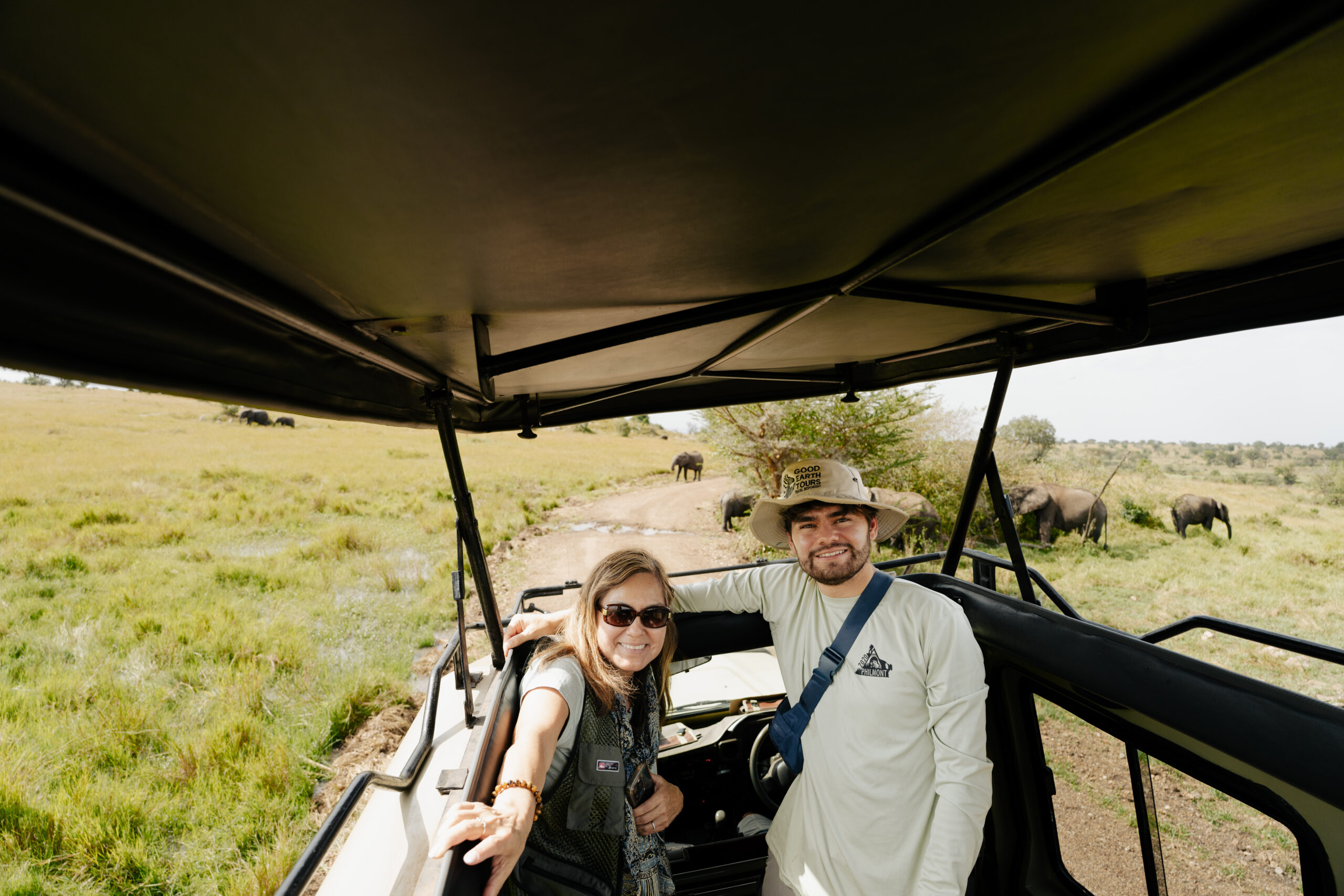
What It Looks Like When an Operator Is Based Where You’re Traveling
Booking an operator based in the destination you’re traveling to is always an excellent idea. First, they speak from real, current knowledge, according to what’s happening right now, which means they are ready to respond faster when something changes, and they’re able to plan with a realistic sense of distance and timing. Another big bonus is that a local safari tour operator will possess direct relationships on the ground with guides, camp managers, drivers, and pilots, so you can naturally expect smoother coordination.
Here’s a video on how to choose the right operator:
Ready to Plan Your Private Safari?
Whether you are comparing quotes or just starting to dream, our team in North America and Arusha will build your trip around you and stay with you from your first message to your last game drive. Get in touch with us today, or explore our Tanzania safaris.
Not ready to talk yet? If you are planning your first safari and do not know where to start, grab our free guide. Get the Free Safari Planning Guide