

Namibia Travel Tips: A Complete Guide for Safari Travelers
Climate
Namibia’s climate is mostly dry and sunny, making it one of Africa’s most reliable year-round safari destinations. The dry season (May to October) is the most popular time to visit, with mild daytime temperatures around 68–86°F (20–30°C) and crisp, clear skies. This is perfect for wildlife viewing in Etosha National Park and photography in the Namib Desert.
The green season (November to April) brings occasional rainfall, especially in the north and central regions. During this time, the landscapes turn lush and vibrant, newborn animals appear, and birdwatching is at its best. However, afternoon storms can occur, and roads in remote areas may be muddy.
Travel Tip: Pack light layers for daytime warmth and cooler evenings. Sunscreen, a wide-brimmed hat, and sunglasses are essentials year-round due to Namibia’s strong desert sun.
For a month by month guide read our: Best Time to Visit Namibia blog.
Currency
Namibia uses the Namibian Dollar (NAD), which is tied to the South African Rand. Both are accepted everywhere. Cards are widely used in towns and lodges, while cash is still useful for fuel stops, tipping and small rural purchases.
ATMs are available in most towns, though small denominations tend to be handy outside major centers.
Language
Namibia has an incredible linguistic diversity. English is the official language and is widely spoken in cities and tourist areas, making travel communication easy. You’ll also hear Afrikaans, German, and several indigenous languages such as Oshiwambo, Nama, and Herero throughout the country.
Electricity
Namibia uses Type D and Type M plugs, with a standard voltage of 220–240V. Travelers from North America and most parts of Europe will need a universal adapter.
Visa and Entry Requirements
Starting April 2025, all visitors will need a visa. You can get one on arrival or through the online e-visa system. Make sure your passport is valid for at least six months with three blank pages and double check that you receive the correct entry stamp at immigration.
Traveling with children requires a full birth certificate and, if only one parent is present, a notarised consent letter. These rules are enforced, so come prepared.
Good to Know
Namibians are known for being warm, polite, and welcoming. Respect for elders and personal space is highly valued. Dress modestly when visiting rural villages or towns; lightweight pants, long skirts, or T-shirts are ideal.
Photography is welcome in most areas, but always ask permission before taking photos of people, especially in traditional communities. Avoid photographing government buildings or military personnel.
Tipping is appreciated but not mandatory. Safari guides and trackers typically receive around USD $10–$15 per day, depending on service.
Health, Vaccinations & Medications
Plan a visit to a travel doctor at least four to six weeks before departure. They may recommend boosters for routine vaccines along with hepatitis A and B, typhoid, tetanus and rabies depending on your itinerary.
The Caprivi and Kavango regions require malaria prophylaxis. If you are arriving from a yellow fever risk country, you will need to show a valid yellow fever certificate at the border.
Pack a small first aid kit with rehydration salts, medication for stomach upsets and motion sickness tablets if you plan on long drives.
Safety & Wellbeing
Namibia is peaceful and welcoming, but like anywhere, it pays to be cautious in cities and busy tourist hubs. Keep valuables out of sight, lock your doors during self-drive trips and avoid leaving bags unattended.
On safari, respect wildlife by giving animals plenty of space and never feeding them. Temperatures can swing from very hot to surprisingly cold, so drink lots of water and wear sun-protective clothing. If you are camping, secure all food to avoid curious hyenas and baboons and never walk around at night without a guide.
Book Your Tour Today
Your Personalized Namibia Travel Tips Tour is Waiting
Why Choose a Namibia Safari?
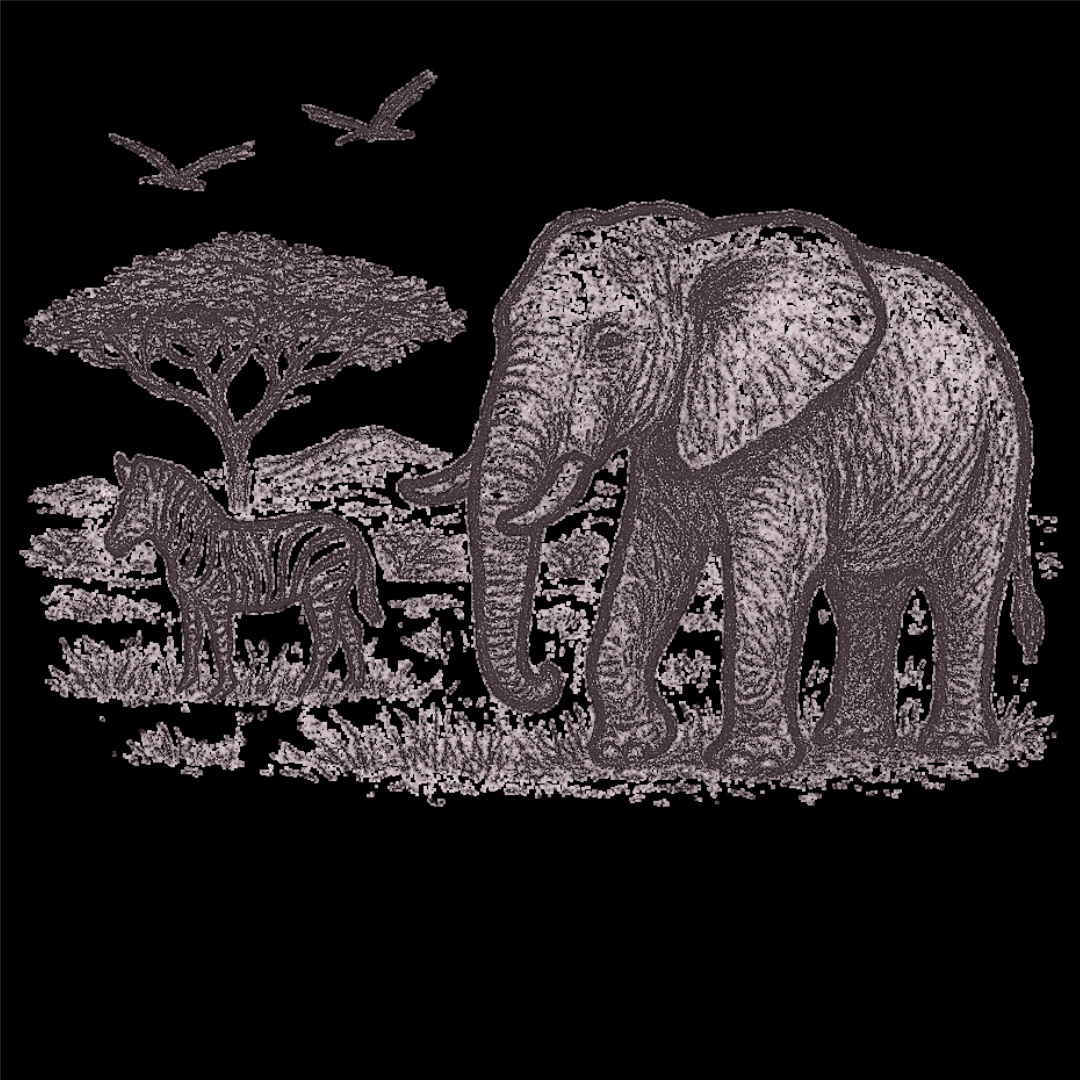
Spot Wildlife in Etosha National Park
Etosha National Park is one of Africa’s best-kept secrets for game viewing, where watering holes attract lions, elephants, rhinos, and rare desert-adapted species in a stark, open landscape.
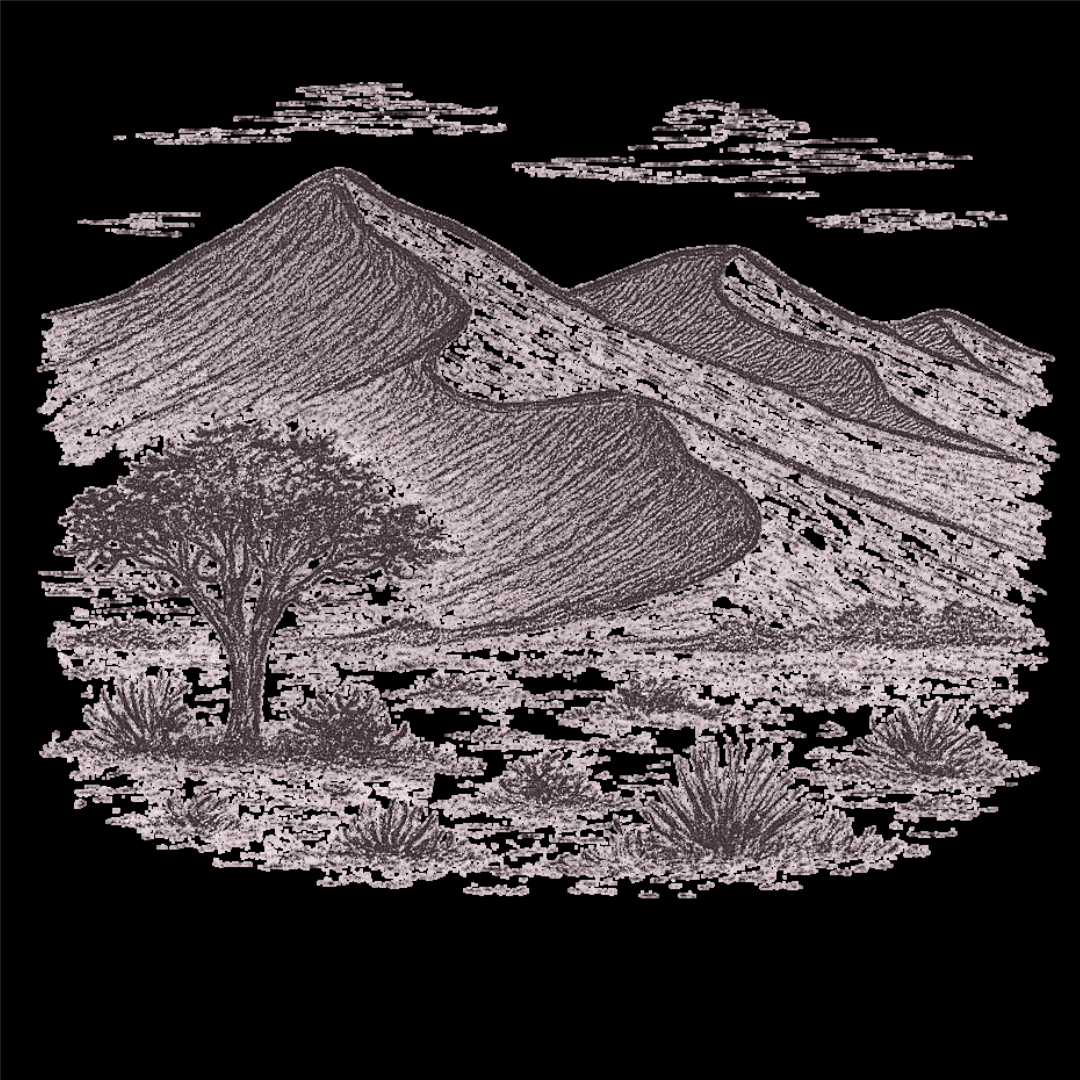
Climb the Iconic Sossusvlei Dunes
The towering red dunes of Sossusvlei in the Namib Desert are some of the tallest in the world, offering stunning sunrise hikes and surreal photography moments in Dead Vlei.
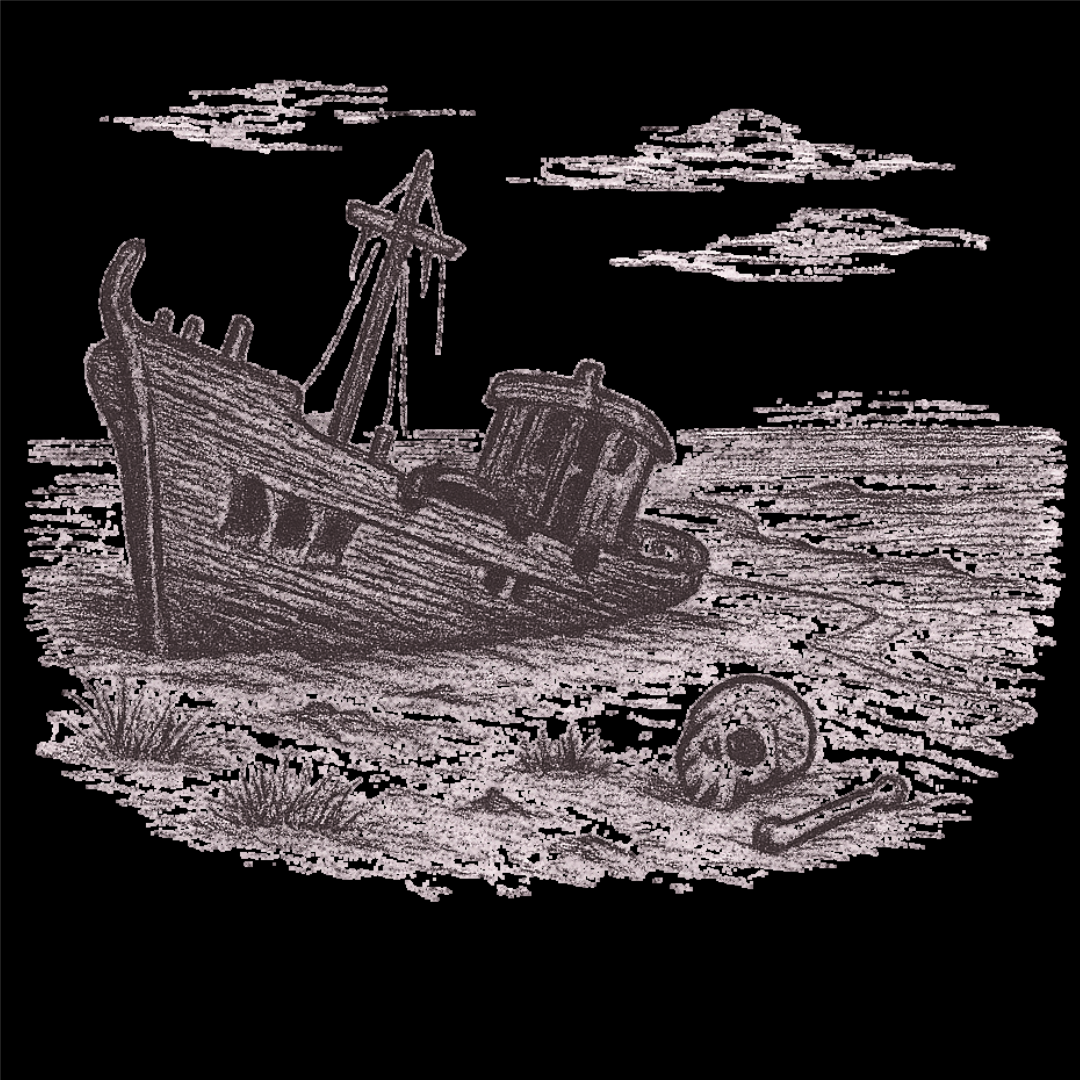
Explore the Remote Skeleton Coast
The Skeleton Coast National Park stretches along Namibia’s Atlantic shoreline, where shipwrecks, seal colonies, and haunting desert scenery create one of the most dramatic coastal experiences on Earth.
Enjoy Solitude and Stargazing in the Namib Desert
With some of the darkest skies in the world and almost no light pollution, Namibia is a dream for stargazers—especially from luxury desert camps nestled in the heart of the Namib.
Travel Seamlessly with Expert-Guided Safaris
Namibia’s vast and remote landscapes are best explored with experienced guides who bring the country’s wildlife, geology, and culture to life—ensuring a safe, immersive, and stress-free safari from start to finish.
Let’s Build Your Dream Namibia Safari
What our clients say when they finally stop researching and just go
EXCELLENTVerified Incredible safari and gorilla trek We just got back from a two-week safari in Tanzania with a gorilla trek in Rwanda. This was one of the best trips we've done. Good Earth Tours, Suzanne, organized everything seamlessly and the lodges they recommended were all outstanding. They also had a great support team in case we had any questions. Joshua was very attentive to us. We had a good combination of tented camps, a cottage in Rwanda, and a more upscale hotel in the Setengeti, but at all points we felt connected to nature. In Tanzania, our guide Edward went above and beyond for us! We visited Tarangire, Lake Manyara, Ngorongoro Crater, and Seregeti. Edwin new where to go to find the animals we wanted to see and he knew where to be when animals were on the move to get the best view and shots. We saw seven leopards! So many cheetahs and lions! We also did a balloon safari which provides a unique perspective of Serengeti from above. Amd the food! All the lodges had outstanding food and the staff were so friendly. I highly recommend Good Earth Tours for your safari.Posted on TripadvisorVerified THOSE WERE THE DAYS! This was our 7th trip to Africa. The others have all been cruises with safari excursions. However, this tour was the best by far. The complete immersive experience can not be topped. Of course this experience was enhanced by our expert guide, Fadhili Komba who was able to quickly spot the animals from afar and get us to them quickly. His knowledge of the animals and their backgrounds was phenomenal. Within the first 3 days we had seem the Big 5. Our pictures are spectacular and close up. #GoodEarthTours provided us with an experience that will never be forgotten. The nightly lodging was exceptional and an experience in itself. The staff at every location were friendly and very helpful. Our picnic lunches were fun to enjoy at every stop. Our 8 days on safari absolutely flew by. We had added on a flight to Zanzibar. We stayed in Stone Town the first night and The Mora Zanzibar on the beach the second night before flying home. These places were the perfect ending to a perfect African trip. Thank you so much Good Earth Tours and especially our beloved guide Fadhili Komba.Posted on TripadvisorVerified Perfection from beginning to end! Good Earth Tours planned everything perfectly and we saw everything we hoped to see and more. The lodgings were top rate, with good food and wonderful staff. Out safari guide, Rick, was outstanding! We were thrilled our entire trip and we've encourage you to consider this wonderful tour group for your own safari!!!Posted on TripadvisorVerified Great Experience My friend and I did a private 12 day East African Safari followed by four days in Zanzibar. We had two wonderful guides John and Obi who helped us get to see everything we could out of the trip. We cannot recommend enough thanks for the memories.Posted on TripadvisorVerified Unforgettable experience! My husband and I decided we wanted to go on a safari in Tanzania a couple months before our anniversary. I did quite a bit of research on options before reaching out to Good Earth Tours but we knew we were pretty last minute for peak season. We started with an inquiry and set up a phone call with Vainess. She asked us many questions on what we were looking for and got to know us. She quickly created an itinerary which consisted of 2 nights in each location (Tarangire, Ngorongoro, Central Serengeti and Northern Serengeti) with our preferences of lodging. We were able to have a fully booked safari in ~1 week! What looked overwhelming turned out to be very simple thanks to Vainess! She communicated with us frequently up to our arrival and even met with us our first day to ensure we knew what to expect and didn’t have any questions. From there on, we were on an incredible adventure with our guide, Ben whom was fantastic! He had our best interests in mind, got us in the perfect spots for wildlife viewing, and was so much fun! During the trip we saw all the wildlife we had hoped to see plus some (including multiples of the big 5)! It was incredible and thanks to the Good Earth Tours team, our trip was seamless! We felt like family and were already talking about a future trip! Thank you so much for making our anniversary trip something we will remember for a lifetime! Highly recommend!Posted on TripadvisorVerified Experience to remember forever!! It was one of the most amazing experiences! This was my second time in Tanzania. I wanted to witness the migration and I did. I did an 8 day safari. Started in Kenya with Mashari in Masai mara and saw all the big 5 in one day! Catching the lions in the middle of their meal, getting a close up of the Black Rhinos, a resting Leopard and much more. Mashari knows his stuff for sure!!. Climate change most definitely has affected the of migration across the Mara river but I was still able to experience amazing crossing with Fadhili in the Northern Serengeti. This gentleman has nearly 20 years of experience and knows every inch of the Serengeti. He took me to parts of Serengeti where I was able to have an uninterrupted and private view of lions, and leopard. No other jeeps or loud tourists around. I felt privileged to be shown around by such an experienced expert. I would highly recommend Good Earth and Fadhili. Notable mentions- Daniel- who got me my checked luggage, in the middle of Serengeti, by making God only knows how many phone calls and requests when KLM took 5 days and then refused to deliver it. Vainess- who essentially stayed on top of everything the whole time. Mashari- man of few words but an amazing guide Fadhili- he says "experience is the best teacher" and this man has had the best of the best. This is the man you want taking you around Serengeti. Best accommodation- Jackals-lair-camp. I felt privileged to share the kitchen with Chef Connor and have dinner with the manager Pascal and Chef Connor.Posted on TripadvisorVerified our dream safari Just got back from our Good Earth safari and we had a fantastic time. The communication from the very beginning was great. We had many questions planning our safari and all our questioned were answered promptly. We had a safari catered to what we wanted and it was perfect. Our guide Moses was fantastic-he put so much effort into our safari making sure we saw all the animals and that we were having a good time. I couldn't recommend him more!Posted on TripadvisorVerified Tanzania 8 day safari for a solo traveler From the planning stage through the end of my safari, everything was excellent. The personalized my safari to fit exactly what I wanted. All of the tent camps I stayed at were wonderful. My guide was warm and personable. He was also a great “spotter” which is key. I never had any concerns about safety and all of my needs were addressed quickly from landing through departure 9 days later. There are many safari groups but this one is very special.Posted on TripadvisorVerified Excellent Safari Our East African safari with Good Earth Tours was an absolutely wonderful experience from start to finish. We traveled through Kenya and Tanzania and had an incredible time. Everything was very well organized, and the entire trip went smoothly. We especially loved our guides, John (Kenya) and Elieza (Tanzania). They were knowledgeable, friendly, and respectful, not only toward us, but also toward the wildlife and the other visitors around us. Their approach made the safari feel special and responsible, and they helped us see everything we had hoped for. We also added a day hike on the Shira Plateau of Mount Kilimanjaro and a visit to Materuni Waterfall, both of which were fantastic additions to the trip. The scenery and experiences were unforgettable and gave us an even greater appreciation for Tanzania. We highly recommend Good Earth Tours to anyone planning a safari in Africa. Their excellent guides, thoughtful planning, and attention to detail made our trip truly memorable. We would happily travel with them again!Posted on TripadvisorVerified Amazing Africa Experience. Hood Earth Tours scheduled a perfect safari and Zanzibar experience. We were able to take relax days as well as long drive days as needed. We saw all big 5 animals and had front row seats for the Wildebeest migration. Our guide James was informative and helpful. A balloon ride over the Serengeti was amazing. There was a mix up on dates but james fixed it quickly. The tent camps were great. Animals walked all around us. Maasai village visit was informative.
Why Choose a Namibia Safari?
Spot Wildlife in Etosha National Park
Etosha National Park is one of Africa’s best-kept secrets for game viewing, where watering holes attract lions, elephants, rhinos, and rare desert-adapted species in a stark, open landscape.
Climb the Iconic Sossusvlei Dunes
The towering red dunes of Sossusvlei in the Namib Desert are some of the tallest in the world, offering stunning sunrise hikes and surreal photography moments in Dead Vlei.
Explore the Remote Skeleton Coast
The Skeleton Coast National Park stretches along Namibia’s Atlantic shoreline, where shipwrecks, seal colonies, and haunting desert scenery create one of the most dramatic coastal experiences on Earth.
Enjoy Solitude and Stargazing in the Namib Desert
With some of the darkest skies in the world and almost no light pollution, Namibia is a dream for stargazers—especially from luxury desert camps nestled in the heart of the Namib.
Travel Seamlessly with Expert-Guided Safaris
Namibia’s vast and remote landscapes are best explored with experienced guides who bring the country’s wildlife, geology, and culture to life—ensuring a safe, immersive, and stress-free safari from start to finish.
Let’s Build Your Dream Namibia Safari
What our clients say when they finally stop researching and just go
EXCELLENTVerified Incredible safari and gorilla trek We just got back from a two-week safari in Tanzania with a gorilla trek in Rwanda. This was one of the best trips we've done. Good Earth Tours, Suzanne, organized everything seamlessly and the lodges they recommended were all outstanding. They also had a great support team in case we had any questions. Joshua was very attentive to us. We had a good combination of tented camps, a cottage in Rwanda, and a more upscale hotel in the Setengeti, but at all points we felt connected to nature. In Tanzania, our guide Edward went above and beyond for us! We visited Tarangire, Lake Manyara, Ngorongoro Crater, and Seregeti. Edwin new where to go to find the animals we wanted to see and he knew where to be when animals were on the move to get the best view and shots. We saw seven leopards! So many cheetahs and lions! We also did a balloon safari which provides a unique perspective of Serengeti from above. Amd the food! All the lodges had outstanding food and the staff were so friendly. I highly recommend Good Earth Tours for your safari.Posted on TripadvisorVerified THOSE WERE THE DAYS! This was our 7th trip to Africa. The others have all been cruises with safari excursions. However, this tour was the best by far. The complete immersive experience can not be topped. Of course this experience was enhanced by our expert guide, Fadhili Komba who was able to quickly spot the animals from afar and get us to them quickly. His knowledge of the animals and their backgrounds was phenomenal. Within the first 3 days we had seem the Big 5. Our pictures are spectacular and close up. #GoodEarthTours provided us with an experience that will never be forgotten. The nightly lodging was exceptional and an experience in itself. The staff at every location were friendly and very helpful. Our picnic lunches were fun to enjoy at every stop. Our 8 days on safari absolutely flew by. We had added on a flight to Zanzibar. We stayed in Stone Town the first night and The Mora Zanzibar on the beach the second night before flying home. These places were the perfect ending to a perfect African trip. Thank you so much Good Earth Tours and especially our beloved guide Fadhili Komba.Posted on TripadvisorVerified Perfection from beginning to end! Good Earth Tours planned everything perfectly and we saw everything we hoped to see and more. The lodgings were top rate, with good food and wonderful staff. Out safari guide, Rick, was outstanding! We were thrilled our entire trip and we've encourage you to consider this wonderful tour group for your own safari!!!Posted on TripadvisorVerified Great Experience My friend and I did a private 12 day East African Safari followed by four days in Zanzibar. We had two wonderful guides John and Obi who helped us get to see everything we could out of the trip. We cannot recommend enough thanks for the memories.Posted on TripadvisorVerified Unforgettable experience! My husband and I decided we wanted to go on a safari in Tanzania a couple months before our anniversary. I did quite a bit of research on options before reaching out to Good Earth Tours but we knew we were pretty last minute for peak season. We started with an inquiry and set up a phone call with Vainess. She asked us many questions on what we were looking for and got to know us. She quickly created an itinerary which consisted of 2 nights in each location (Tarangire, Ngorongoro, Central Serengeti and Northern Serengeti) with our preferences of lodging. We were able to have a fully booked safari in ~1 week! What looked overwhelming turned out to be very simple thanks to Vainess! She communicated with us frequently up to our arrival and even met with us our first day to ensure we knew what to expect and didn’t have any questions. From there on, we were on an incredible adventure with our guide, Ben whom was fantastic! He had our best interests in mind, got us in the perfect spots for wildlife viewing, and was so much fun! During the trip we saw all the wildlife we had hoped to see plus some (including multiples of the big 5)! It was incredible and thanks to the Good Earth Tours team, our trip was seamless! We felt like family and were already talking about a future trip! Thank you so much for making our anniversary trip something we will remember for a lifetime! Highly recommend!Posted on TripadvisorVerified Experience to remember forever!! It was one of the most amazing experiences! This was my second time in Tanzania. I wanted to witness the migration and I did. I did an 8 day safari. Started in Kenya with Mashari in Masai mara and saw all the big 5 in one day! Catching the lions in the middle of their meal, getting a close up of the Black Rhinos, a resting Leopard and much more. Mashari knows his stuff for sure!!. Climate change most definitely has affected the of migration across the Mara river but I was still able to experience amazing crossing with Fadhili in the Northern Serengeti. This gentleman has nearly 20 years of experience and knows every inch of the Serengeti. He took me to parts of Serengeti where I was able to have an uninterrupted and private view of lions, and leopard. No other jeeps or loud tourists around. I felt privileged to be shown around by such an experienced expert. I would highly recommend Good Earth and Fadhili. Notable mentions- Daniel- who got me my checked luggage, in the middle of Serengeti, by making God only knows how many phone calls and requests when KLM took 5 days and then refused to deliver it. Vainess- who essentially stayed on top of everything the whole time. Mashari- man of few words but an amazing guide Fadhili- he says "experience is the best teacher" and this man has had the best of the best. This is the man you want taking you around Serengeti. Best accommodation- Jackals-lair-camp. I felt privileged to share the kitchen with Chef Connor and have dinner with the manager Pascal and Chef Connor.Posted on TripadvisorVerified our dream safari Just got back from our Good Earth safari and we had a fantastic time. The communication from the very beginning was great. We had many questions planning our safari and all our questioned were answered promptly. We had a safari catered to what we wanted and it was perfect. Our guide Moses was fantastic-he put so much effort into our safari making sure we saw all the animals and that we were having a good time. I couldn't recommend him more!Posted on TripadvisorVerified Tanzania 8 day safari for a solo traveler From the planning stage through the end of my safari, everything was excellent. The personalized my safari to fit exactly what I wanted. All of the tent camps I stayed at were wonderful. My guide was warm and personable. He was also a great “spotter” which is key. I never had any concerns about safety and all of my needs were addressed quickly from landing through departure 9 days later. There are many safari groups but this one is very special.Posted on TripadvisorVerified Excellent Safari Our East African safari with Good Earth Tours was an absolutely wonderful experience from start to finish. We traveled through Kenya and Tanzania and had an incredible time. Everything was very well organized, and the entire trip went smoothly. We especially loved our guides, John (Kenya) and Elieza (Tanzania). They were knowledgeable, friendly, and respectful, not only toward us, but also toward the wildlife and the other visitors around us. Their approach made the safari feel special and responsible, and they helped us see everything we had hoped for. We also added a day hike on the Shira Plateau of Mount Kilimanjaro and a visit to Materuni Waterfall, both of which were fantastic additions to the trip. The scenery and experiences were unforgettable and gave us an even greater appreciation for Tanzania. We highly recommend Good Earth Tours to anyone planning a safari in Africa. Their excellent guides, thoughtful planning, and attention to detail made our trip truly memorable. We would happily travel with them again!Posted on TripadvisorVerified Amazing Africa Experience. Hood Earth Tours scheduled a perfect safari and Zanzibar experience. We were able to take relax days as well as long drive days as needed. We saw all big 5 animals and had front row seats for the Wildebeest migration. Our guide James was informative and helpful. A balloon ride over the Serengeti was amazing. There was a mix up on dates but james fixed it quickly. The tent camps were great. Animals walked all around us. Maasai village visit was informative.